When I was fifteen, my dream job was to work at a department store and sell perfume. I have no idea what that was about. I don't even like perfume. Maybe I thought it sounded like easy work--lounging behind a glass counter, arranging bottles, spritzing people...
The jobs I ended up with were so far away from that perfumy vision, it's laughable. I chopped whole chickens in half at York Steakhouse. I scrubbed pizza pans at Papa Gino's Pizzeria. I flipped steaks at Ponderosa. I busted my butt waiting tables at TGI Fridays and Perkins (jobs I still have nightmares about). At the end of my shifts, let's just say, I did not smell like perfume.
When I was in grad school, a friend of mine suggested I apply for a job where he worked, a bookstore. This sounded like a cool gig. I knew how to work a cash register. I wouldn't have to wear a grease-spattered polyester uniform. I had what I thought was an extensive knowledge of books.
What I didn't have was much experience with bookstores, unless you count bopping into one of those Walden Books places at the mall every Christmas to pick out a yearly calendar. Up to that point, I was a total library fan girl.
But man oh man, the first time I stepped foot into the Davis Kidd Booksellers store in Memphis, I swooned. 100,000 + books. Bookcases upon bookcases. Tables piled high with stacks. And more books lining the walls. Comfy chairs. Cozy nooks. Pillows.
Oh! a book-loving, nerdy, poet-writing grad student could get lost for days in a place like that. I loved everything about working at Davis Kidd except for one rule: we were not allowed to read on the job. I confess that I did. Unpacking boxes of fresh new books and arranging them on the shelves, geez, how could you not stop to read the blurbs on the backs? Or thumb through the pages. Or, um, read a couple of chapters?
My co-workers were the coolest people, fellow book lovers, many with advanced degrees or students like me (like I?) See, if I were still working there, I could ask any grammar question, and someone would know the answer. This was before the internet, before you could ask your phone any question in the world and get an almost instantaneous answer. No, children, before the internet, before smart phones, you had to just sit around and wonder what the answer was.
Or, you could call Davis Kidd Booksellers and a clerk would tell you.
I'm not lying. We got calls like that all the time.
We also hosted story times and author signings. We chatted with customers about the latest bestsellers, classics, and forgotten gems. People browsed around, listening to music and sipping coffee.
Bookstores, sadly, tragically, are struggling, and many are going out of business. It's hard to compete with the low prices and convenience of Amazon. And more and more people are downloading books on e-readers. I'm not knocking this practice. But I do so hope that we'll still have places for book-loving people to gather and browse.
This Saturday, Nov. 30, is Small Business Saturday. Author Sherman Alexie put out a call to fellow writers to support their local independent bookstores. Shop. Volunteer to work. Hand sell books. So, that is what I am going to do.
You can find me at my favorite bookstore in Columbus--Cover to Cover Bookstore.
Please come out and say hello. I promise I will not be reading on the job.
Wednesday, November 27, 2013
Tuesday, November 19, 2013
What Happens When the Birthday Celebration Gene Skips a Generation
Today is my mother's birthday. She is turning 70, which is a milestone as far as birthdays go, and clearly something to celebrate. For my mother all birthdays are a good excuse to celebrate.
I wrote recently (here) that if there is such thing as a Cleaning Gene, I did not inherit it. Well, if a Birthday Celebration Gene exists, I missed out on that one too.
My mother tried her best to instill a love for birthday celebrations in me. When I was growing up, she always threw me a party. Nothing over the top--when I was a kid people didn't go nutso over birthday parties like they do now. No themed parties or gift bags or bouncy tents--but my mother always baked a cake. She always invited my aunts and uncles and cousins over for a party after dinner. I had a big candle that had the numbers all the way to 21 on it.
My mother started this tradition on my first birthday, burning the candle all through the party until that year's number disappeared. Every year she brought the candle out and lit it. Now that I'm thinking about it, this is pretty impressive--that she remembered it, that she could find where she'd stored the thing. I can barely remember where I store my Christmas tree ornaments.
The year I turned 21 was the first year I celebrated my birthday away from home. I was staying at a college friend's house for the weekend and unbeknownst to me, my mother had mailed the last remnant of my special birthday candle there. She called the friend's mother and gave detailed instructions--this was it for Jody's birthday candle. That number 21 needed to be burned to keep up with the tradition that had been going since I was a baby.
I don't know what my friend's family thought about all this. But let me tell you, they burned that candle for me. That was the year my mother started a new tradition.
I was born at 11:42 in the morning, and she called me at that exact time to tell me the story of my birth and to wish me happy birthday. Every year since then, if she is not with me at 11:42, she calls me.
Sometimes this tradition has veered into bizarro-land. IE, the time my mother was driving along and realized it was nearing 11:42 and she had to pull off the highway to find a payphone. (This was before cell phones.)
Or the year I turned 24 and had a job interview for a teaching position at a high school. I was sitting in the principal's office being interviewed when the phone rang. The principal answered and nodded and smiled, while I sat there thinking maybe it was normal for an interviewer to have a chatty conversation with someone on the phone during an interview. The principal kept smiling and nodding and then she handed me the phone.
It was my mother.
She had just explained to the principal that it was 11:42 and it was my birthday etc. I nearly died of embarrassment. But the principal thought that entire thing was a hoot. (PS. I got the job.)
Over the years I have tried to live up to my mother's birthday celebrating example. My husband and I threw parties for the kids when they were growing up. Some of these were even over the top bashes. As the kids have gotten older we've had smaller celebrations. The kids didn't seem to mind. We go out to dinner. Maybe invite a few friends over. I bake a cake.
Things have really started to taper off lately, and a couple of years ago I hit rock bottom. My daughter was turning 14 and she was busy doing stuff and I was busy doing stuff and I asked her what kind of cake she wanted me to bake her and she acted like she didn't care and yadda yadda ya, and the next thing I knew, it was the night of her birthday and I had nothing. NOTHING.
Okay, I did have a couple of candles. Which I duct-taped to the counter.
Not my proudest moment as a mom.
While I am confessing shameful things, here's one more: I have no idea what time my mother was born. Today is her birthday and I can't call her at the exact time because I don't know what that time is. Until this moment, I have never even thought to ask her.
Is it too late? Can someone who clearly has not been blessed with a Birthday Celebration Gene start a new tradition?
Hmm. Okay.
Right after I post this blog, I will call my mom and ask her. And if the time has already passed, I will make a note of it for next year. In the meantime, "Happy birthday," I will tell her. And later today I will bake a cake. I will poke 70 candles into it and present it to her.
It's not every day that it's someone's birthday after all.
I wrote recently (here) that if there is such thing as a Cleaning Gene, I did not inherit it. Well, if a Birthday Celebration Gene exists, I missed out on that one too.
My mother tried her best to instill a love for birthday celebrations in me. When I was growing up, she always threw me a party. Nothing over the top--when I was a kid people didn't go nutso over birthday parties like they do now. No themed parties or gift bags or bouncy tents--but my mother always baked a cake. She always invited my aunts and uncles and cousins over for a party after dinner. I had a big candle that had the numbers all the way to 21 on it.
My mother started this tradition on my first birthday, burning the candle all through the party until that year's number disappeared. Every year she brought the candle out and lit it. Now that I'm thinking about it, this is pretty impressive--that she remembered it, that she could find where she'd stored the thing. I can barely remember where I store my Christmas tree ornaments.
The year I turned 21 was the first year I celebrated my birthday away from home. I was staying at a college friend's house for the weekend and unbeknownst to me, my mother had mailed the last remnant of my special birthday candle there. She called the friend's mother and gave detailed instructions--this was it for Jody's birthday candle. That number 21 needed to be burned to keep up with the tradition that had been going since I was a baby.
I don't know what my friend's family thought about all this. But let me tell you, they burned that candle for me. That was the year my mother started a new tradition.
I was born at 11:42 in the morning, and she called me at that exact time to tell me the story of my birth and to wish me happy birthday. Every year since then, if she is not with me at 11:42, she calls me.
Sometimes this tradition has veered into bizarro-land. IE, the time my mother was driving along and realized it was nearing 11:42 and she had to pull off the highway to find a payphone. (This was before cell phones.)
Or the year I turned 24 and had a job interview for a teaching position at a high school. I was sitting in the principal's office being interviewed when the phone rang. The principal answered and nodded and smiled, while I sat there thinking maybe it was normal for an interviewer to have a chatty conversation with someone on the phone during an interview. The principal kept smiling and nodding and then she handed me the phone.
It was my mother.
She had just explained to the principal that it was 11:42 and it was my birthday etc. I nearly died of embarrassment. But the principal thought that entire thing was a hoot. (PS. I got the job.)
Over the years I have tried to live up to my mother's birthday celebrating example. My husband and I threw parties for the kids when they were growing up. Some of these were even over the top bashes. As the kids have gotten older we've had smaller celebrations. The kids didn't seem to mind. We go out to dinner. Maybe invite a few friends over. I bake a cake.
Things have really started to taper off lately, and a couple of years ago I hit rock bottom. My daughter was turning 14 and she was busy doing stuff and I was busy doing stuff and I asked her what kind of cake she wanted me to bake her and she acted like she didn't care and yadda yadda ya, and the next thing I knew, it was the night of her birthday and I had nothing. NOTHING.
Okay, I did have a couple of candles. Which I duct-taped to the counter.
Not my proudest moment as a mom.
While I am confessing shameful things, here's one more: I have no idea what time my mother was born. Today is her birthday and I can't call her at the exact time because I don't know what that time is. Until this moment, I have never even thought to ask her.
Is it too late? Can someone who clearly has not been blessed with a Birthday Celebration Gene start a new tradition?
Hmm. Okay.
Right after I post this blog, I will call my mom and ask her. And if the time has already passed, I will make a note of it for next year. In the meantime, "Happy birthday," I will tell her. And later today I will bake a cake. I will poke 70 candles into it and present it to her.
It's not every day that it's someone's birthday after all.
Friday, November 15, 2013
Pushing Through the Mushy Middle
As promised (here) I'm back to give my middle of the month NaNoWriMo pep talk. Saturday I spoke to a group of gung-ho authors hunkered down at the Thurber House for a Columbus area write-in, and Wednesday night I met with writers at the local library in my town. I was blown away by the number of people who showed up for both of these sessions.
Everyone and their mother seems to be participating in NaNoWriMo this year.
Okay. This is a slight exaggeration. I am not signed up for NaNo this year. And neither is my mother. But it does sorta feel like there's been an uptick of interest. (Just checked and there are almost 300,000 people plugging away on novels according to the NaNo site.)
Many of those people may be floundering around at this point in the process.
All of that energy and excitement you had on Day One--the cool ideas, the interesting characters, that brilliantly worded first line--all of that tends to fall away on like Day 5 or 6ish, and suddenly the ideas seem dumb, the characters are meh, and what the heck were you thinking? the first line is ridiculously pretentious.
But I am here to tell you to keep writing anyway.
Some people say that writing a novel is like driving through Texas.
It's a freaking long trip and maybe your car will break down, or you will get lost, or you will veer off the road to avoid hitting an...um...armadillo. You'll wonder if you should turn back, quit driving, and perhaps check out the condo rentals in this little town in Texas where your car has overheated.
Don't.
Have your car tuned up by a local mechanic, get a bite to eat at the Waffle House next door, then get back into your car, set your GPS, and go. New Mexico is only like, 400 miles away.
Wait. What were we talking about again?
What I meant to tell you is KEEP WRITING. As Robert Frost famously said: "The only way out is through." Yeah, I know what you're thinking. Who is the poet Robert Frost to be giving us advice? He wrote poems for God's sake, which everyone knows are MUCH MUCH shorter than 50,000 word novels.
Sigh. Somehow these "inspirational" talks of mine always devolve into commiserating with people about how HARD it is to write a book. Yeah, you're going to have finish this first draft and it's going to be a big messy thing and you're going to have to revise it. Multiple times. And then it's likely never going to be published. Blah blah blah, and instead of being inspired, everyone's depressed.
I promise I did give these hunkered down writers what I hoped were a few practical helpful tips.
The big one, something that has helped me in the past, is to take a look at the Hero's Journey. For those of you who have not heard of it, the Hero's Journey is basically an outline behind every story ever told. The hero leaves the comfortable (or not so comfortable) Ordinary World and sets off on his real (or psychological) journey.
Along the way he meets friends and fights enemies. He learns the rules of the Special World and faces his demons. At some point he approaches danger and what seems to be certain death, but he fights that battle and emerges with his reward.
In the end he returns home a changed person.
There's more to it and you can read about it Joseph Campbell's The Hero with a Thousand Faces. Another helpful resource is Christopher Vogler's The Writer's Journey.
Many writers use the Hero's Journey template to structure their books. I see it more as a guideline, though, something to keep in the back of your mind while you are writing, especially if you are the type of writer who does not outline extensively before you begin. If you're stuck, it can't hurt to see where your main character is on his journey.
And it can't hurt to see where YOU are on your Writing a Book Journey.
If you are mired in the mushy middle--if your story has veered off and what you thought you were writing about has turned into something else, or if your main character has disappeared, or if new characters have mysteriously plopped into the narrative on page 100, or if the realistic novel you thought you were writing suddenly evolves into a Sci-Fi thriller--there is no quick fix, no magical secret.
Worry about that stuff later. Make a note to yourself and move on. Get back in the damn car and keep sputtering down the road.
PS. If you're really blocked, you can always kill a character or blow something up.
Tune in next month when I give you every trick I know for revising your messy first draft and for one day, possibly, hopefully, getting it out there into Publishing Land.
Everyone and their mother seems to be participating in NaNoWriMo this year.
Okay. This is a slight exaggeration. I am not signed up for NaNo this year. And neither is my mother. But it does sorta feel like there's been an uptick of interest. (Just checked and there are almost 300,000 people plugging away on novels according to the NaNo site.)
Many of those people may be floundering around at this point in the process.
All of that energy and excitement you had on Day One--the cool ideas, the interesting characters, that brilliantly worded first line--all of that tends to fall away on like Day 5 or 6ish, and suddenly the ideas seem dumb, the characters are meh, and what the heck were you thinking? the first line is ridiculously pretentious.
But I am here to tell you to keep writing anyway.
Some people say that writing a novel is like driving through Texas.
It's a freaking long trip and maybe your car will break down, or you will get lost, or you will veer off the road to avoid hitting an...um...armadillo. You'll wonder if you should turn back, quit driving, and perhaps check out the condo rentals in this little town in Texas where your car has overheated.
Don't.
Have your car tuned up by a local mechanic, get a bite to eat at the Waffle House next door, then get back into your car, set your GPS, and go. New Mexico is only like, 400 miles away.
Wait. What were we talking about again?
What I meant to tell you is KEEP WRITING. As Robert Frost famously said: "The only way out is through." Yeah, I know what you're thinking. Who is the poet Robert Frost to be giving us advice? He wrote poems for God's sake, which everyone knows are MUCH MUCH shorter than 50,000 word novels.
Sigh. Somehow these "inspirational" talks of mine always devolve into commiserating with people about how HARD it is to write a book. Yeah, you're going to have finish this first draft and it's going to be a big messy thing and you're going to have to revise it. Multiple times. And then it's likely never going to be published. Blah blah blah, and instead of being inspired, everyone's depressed.
I promise I did give these hunkered down writers what I hoped were a few practical helpful tips.
The big one, something that has helped me in the past, is to take a look at the Hero's Journey. For those of you who have not heard of it, the Hero's Journey is basically an outline behind every story ever told. The hero leaves the comfortable (or not so comfortable) Ordinary World and sets off on his real (or psychological) journey.
Along the way he meets friends and fights enemies. He learns the rules of the Special World and faces his demons. At some point he approaches danger and what seems to be certain death, but he fights that battle and emerges with his reward.
In the end he returns home a changed person.
There's more to it and you can read about it Joseph Campbell's The Hero with a Thousand Faces. Another helpful resource is Christopher Vogler's The Writer's Journey.
Many writers use the Hero's Journey template to structure their books. I see it more as a guideline, though, something to keep in the back of your mind while you are writing, especially if you are the type of writer who does not outline extensively before you begin. If you're stuck, it can't hurt to see where your main character is on his journey.
And it can't hurt to see where YOU are on your Writing a Book Journey.
If you are mired in the mushy middle--if your story has veered off and what you thought you were writing about has turned into something else, or if your main character has disappeared, or if new characters have mysteriously plopped into the narrative on page 100, or if the realistic novel you thought you were writing suddenly evolves into a Sci-Fi thriller--there is no quick fix, no magical secret.
Worry about that stuff later. Make a note to yourself and move on. Get back in the damn car and keep sputtering down the road.
PS. If you're really blocked, you can always kill a character or blow something up.
Tune in next month when I give you every trick I know for revising your messy first draft and for one day, possibly, hopefully, getting it out there into Publishing Land.
Friday, November 8, 2013
Teen Guest Post: WHO AM I? by Isabel Randolph
As promised here, I'm hosting a guest blog series called WHO AM I? and have invited teen writers to contribute.
And a shout out to my artistic teen neighbor Courtney Berger for designing the awesome banner.
----------------------------------------------------------------------------------------------
Who Am I?
by Isabel Randolph, guest blogger
If I wanted to be cutesy and cheesy and baseline poetic, I would say that I am a liberal artist, integrating aspects of the liberal arts education into every part of my life. However, the thought of being so cloyingly cute, and particularly the thought of being so cloyingly cute in poetry, makes me cringe a little bit, so I guess we can call that answer number one to the question ‘Who am I?’.
Let’s cover the facts; I’m a student in my second year at a small, private liberal arts university where I’m studying everything, though specifically English, economics, and various foreign languages, along with leading the fencing club, volunteering, working, and continually looking for new experiences. By May next year, I’ll be halfway done with my undergraduate experience, and I’ll be 20 years old, and the more I think about it the more terrifying that thought becomes. That’s two decades of time spent rotating the sun... I feel old! And young. And sometimes stuck in between.
Ignoring any quarter life-crises, I’m happier to be riding out the end of my teenage years than I was when thoroughly entrenched in them, a sentiment I semi-assume most people would adhere to. Like Jane mentioned in her post for this series, it’s so easy to get caught up in the social standards, especially in a setting like high school where it seems as if everyone has been together for ages, and because you spend so much time together just as you’re learning to define yourself, you also start to define each other. Like, I’m pretty sure I’ll always have a reminiscent affection for My Chemical Romance thanks to a best friend in middle school, and I know at least some of my drive to do really well academically was kick-started by a boyfriend in high school.
And sure, maybe those fun character-quirks would have happened anyway-- it’s possible. However, I’m inclined to think they’re much more attributes to relationships I’ve had, and, to be honest, I think that’s something that’ll happen no matter when or where you are. I could throw out examples now even to prove that that kind of influence doesn’t stop at high school graduation (hello, new found interest in Arabic and working knowledge of Twitter).
More than influences on each other, though, I think the pressure that creates that ‘trap’ feeling in high school comes from others’ expectations of you, and your reputation, and how ‘this is how you’ve been for the past five years, so obviously this is how you’ll still be, and always.’ It was that image that I remember feeling most caught in, and while I did change and grow some, probably along with the same ways everyone else was growing, it took graduating and effectively moving out of the bubble to truly get away from those expectations.
Yeah, it’s a cliche, and I’m trying to not veer back into cutesy, cheesy waters, but getting a new start was what I needed to really tackle the ‘who am I?’ question. One could argue that that’s a question with no answer, or no definite answer, anyway, but with the authority of a 19 year old who really doesn’t have a whole lot figured out (authority? what authority?), I’m going to say that I have a better answer now than I did before, which brings us to... now.
I so tongue-in-cheekily threw out the expression ‘liberal artist’ because, while I’m probably not going to stick it on a business card or resume anytime soon, it does convey probably one of the biggest things I’ve learned about myself: that when it comes to learning, I don’t want my liberal arts education to stop outside of the classroom. We’re taught on these ethical pillars, the idea that a well-rounded, well-informed student becomes an autonomous thinker and problem solver, and overall has a better understanding of the world, and that ties right into my goals because, the million dollar question, who am I?
I’m ambitious, and overachieving, and I’ve always had a little bit of an issue with teetering on that line between maximizing output and taking on just a little bit too much. I don’t know if it comes from a fast-paced society propelled by technology and instant gratification or my impending entry into a third decade on this planet (and I thought two decades sounded crazy...), an ambitious friend from high school or just the lingering aftereffects of so many jokes about the world’s apocalyptic doom the year I graduated, but I do have this sense that I have a lot of ground to cover, the sooner the better. Multitasking, getting experience in different areas, attempting to cultivate different interests; it all feels like stock ingredients that are slowly adding more facets and experiences and stories to my life.
Who am I? I’m over-caffeinated, slightly neurotic, and really, really stressed. I’m also excited, and impatient, and working on adding confident to the list.
That being said, last weekend was the first time in almost five months that I got to go home for more than 24 hours, and did I have internship work I should have been doing? Miles I should have been running? Blog posts and scholarship applications I should have been writing? Sure, yes, definitely. Did I blow off the vast majority of those responsibilities to see my best friends, shuttle my brothers around town, and go out with my parents? Yes, yes, yes. Did my entire potential future collapse before my eyes in a metaphoric pile of ‘coulda shoulda woulda?’ Negative. Finding that balance in priorities is the next big thing I have to tackle.
I’m grateful, to be lucky enough to get to go to a fancy school with a solid scholarship, to have parents and family and friends who love me and support me, even to have the abilities to run and go out and occasionally eat way too many cookies without serious repercussions. I do feel the pressure of those opportunities, though, and that’s just part of the equation, I guess. I’m lucky and crazy and hopeful and intelligent and hoping that didn’t sound self-centered and stressed out and overwhelmed, but mostly I’m young, and it’ll be okay, and I’ve got time.
Sunday, November 3, 2013
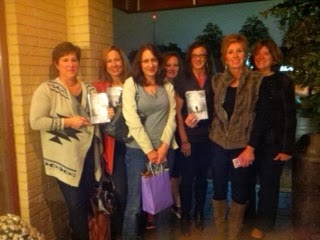
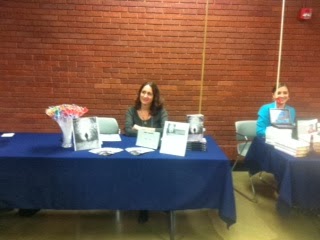
On the Road (and Off): Photo Diary of the Thin Space Book Tour (PS: this my 200th blog post!)
Sooooooo Thin Space has been out for nearly two months and I've been having a grand old time talking it up with family, friends and sometimes, shockingly--people I don't know.
This has been kind of a whirlwind travel schedule and totally NOT the norm for me, which usually consists of me sitting on the couch and staring bleary-eyed at the computer screen interspersed with multiple walks with my high strung dog. But what I've discovered is that being on the road can be fun too (once I got over my slightly agoraphobic/I hate driving alone-itis issue. See here.)
But that seemed to be the extent of the damage.
This has been kind of a whirlwind travel schedule and totally NOT the norm for me, which usually consists of me sitting on the couch and staring bleary-eyed at the computer screen interspersed with multiple walks with my high strung dog. But what I've discovered is that being on the road can be fun too (once I got over my slightly agoraphobic/I hate driving alone-itis issue. See here.)
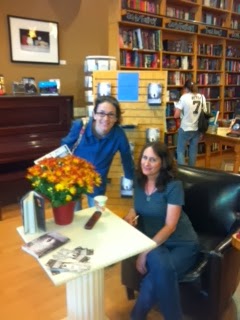
| A display at Parnassus Books, the cool independent bookstore in Nashville owned by author Ann Patchett |
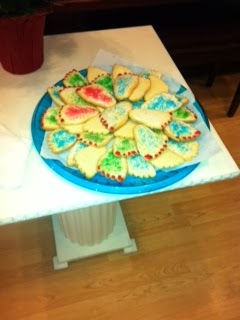
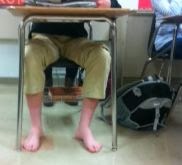
| My in-laws made cookies shaped like feet. |
| And I met Jessica Young, author of My Blue Is Happy |
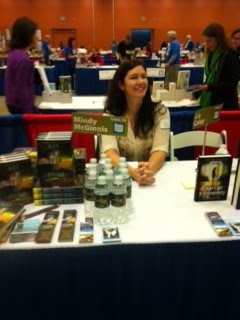
| My first book festival--Books by the Banks in Cincinnati--where I learned that having a huge bowl of candy on the table is a helpful marketing technique. |
| A trip to Memphis to visit my husband's and my alma mater, Rhodes College--where we are subtly, or not so subtly, urging our teen daughter to apply. |
| "Look, honey, can't you just see yourself going to school at this place?" |
| I mean, really. THIS is the ceiling of the Rhodes library. |
| Taking a lesson from Mindy McGinnis, I gave out something that tied in with my book--lollipops shaped like feet. |
| The Buckeye Book Fair in Wooster Ohio. The feet lollipops were a big hit. |
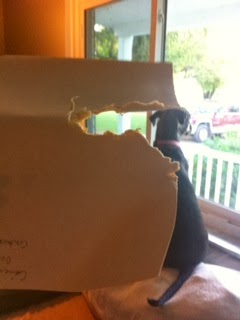
| Only downside to my travels: a dog who is less than thrilled. Here she takes out her displeasure on my file folder. |
But that seemed to be the extent of the damage.
Monday, October 21, 2013
Thinking About Writing a Book in 30 Days? (Here's a bit of advice to get you started...)
Last week I did a presentation at two local libraries for writers interested in taking the NaNoWriMo challenge this year. NaNo, in case you are wondering, is a cool writing site where participants pledge to write a 50,000 word novel during the month of November. It costs nothing to join and you get to be part of a cool community of writers all chugging along on the same crazy journey. At the end of the month, if you meet your goal, you win a virtual badge (WOO HOO!) and the satisfaction of knowing you've got a finished first draft to play around with later.
Tracie, the awesome librarian at the Upper Arlington Ohio library who'd asked me to give the presentation, introduced me as a writer with lots of wisdom to share.
I had a hardy laugh about that. Yes, I may have won the virtual NaNo badges (For the record, I wrote four novels during previous NaNos and one of those novels turned into--after multiple revisions--my first published novel.) but in many ways I am still a beginner. Each day's writing is just as hard (if not harder) than the day before, and if I have learned anything over the years, it is that I always have more to learn.
Anyhoo, a few writers emailed to say that they could not make either of the presentations but would love it if I could share my notes. I'm not sure how useful these will be, but in the spirit of sharing "wisdom," here goes:
1. The nitty gritty. Get out a calendar page of the month of November. Look at the days you will realistically be able to write. Count them up. Divide 50,000 words by that number. The answer equals the number of words you will have to write per day if you want to win. To put this in perspective: if you plan to write all 30 days, you will need to write 1667 words per day. I NEVER could do that. There's Thanksgiving to think about. As well as life in general. My daily word count goal was always something nutty like 2800 words.
2. Every book begins with an idea (or two).
3. Once you've got your ideas/basic plot/questions, the next step is
To outline
Or
Not to outline
It's perfectly okay during this pre-NaNo time to outline your story. I'm not talking the formal outlines you did in seventh grade with Roman numerals. Simply write out a list of your characters, a few of your ideas, the conflict and questions. Chart out scenes, etc. Some writers I know write very detailed outlines that go one for 50 pages.
I am not one of these writers.
The beauty of NaNo is that you can start writing your book with very little plotted out in advance. Take your two ideas or your question or your basic plot idea and just see how it all plays out as you write.
4. Now, for the BIG SECRET TO WRITING A BOOK.
Once upon a time I went to a writing conference where the brilliant author Jane Yolen told the audience of 1000 people that she was about to share her secret to writing a book. She paused, and you could hear all 1000 people holding their breaths and leaning forward eagerly.
The answer, Jane Yolen said, is BIC.
Another pause.
And then she smiled and said, "Put your Butt In the Chair and write."
Yeah. The truth is there are no short cuts and no magic answers. But know this about NaNo, and about writing a book in general (and this probably applies to anything in life--such as running a marathon or losing 20 pounds): if you chip away at your goal by writing those 1667 words per day, in the end you will make it to the finish line.
5. To get yourself warmed up each of those days
Read books on writing. (See the list below for helpful books on craft, inspiration, writer's block, etc.)
Before I begin a writing session, I read a chapter from one of these books.
Or journal the junk out. Every morning write for ten minutes--all the gibberish-y stuff clogging up your brain and keeping you from thoughtfully beginning your work for the day. Anxieties, snippets of dreams, arguments you're having with the comment section of a Yahoo news article, bills you've got to pay, etc. Get it on the page and out of your head.
Do whatever you need to do to get your daily word count done. Set an alarm. Flip an hour glass (my little trick). Leave the house and write in a coffee shop. Stay in the house and lock yourself in a closet. Or mix it up and try a different motivational strategy each day.
Don't forget to reward yourself at the end of a session. Writing 1667 words in a day may not seem like that big of a deal, but do it today, and the next day, and the day after that... and you deserve a piece of chocolate. Or a bag of Doritos.
6. Biggest nugget of wisdom I know: Resist the urge to revise as you go. NaNo is about quantity NOT quality. Get the words down (crappy as they may be) and worry about fixing things later. If it helps, keep a notebook on the side of all the things you want to delete/change/fix later. DON'T WORRY ABOUT THAT STUFF NOW.
And finally, remember E.L. Doctorow's true words of wisdom:
“Writing is like driving at night in the fog. You can only see as far as your headlights, but you can make the whole trip that way.”
Good luck. And meet me back here in mid November for a middle of the month pep talk.
Some helpful books on writing
Writing Down the Bones, Wild Mind, and Thunder and Lightning by Natalie Goldberg
The War of Art by Steven Pressfield
Making a Literary Life by Carolyn See
One Continuous Mistake by Gail Sher
Wired for Story by Lisa Cron
Bird by Bird by Anne Lamott
On Writing by Stephen King
The Artist's Way by Julia Cameron
Elements of Style by Strunk and White
PS. Here's a post I wrote last year on why you should NEVER EVER send your "finished" first draft out to a publishing company or an agent on Dec. 1.
Tracie, the awesome librarian at the Upper Arlington Ohio library who'd asked me to give the presentation, introduced me as a writer with lots of wisdom to share.
I had a hardy laugh about that. Yes, I may have won the virtual NaNo badges (For the record, I wrote four novels during previous NaNos and one of those novels turned into--after multiple revisions--my first published novel.) but in many ways I am still a beginner. Each day's writing is just as hard (if not harder) than the day before, and if I have learned anything over the years, it is that I always have more to learn.
Anyhoo, a few writers emailed to say that they could not make either of the presentations but would love it if I could share my notes. I'm not sure how useful these will be, but in the spirit of sharing "wisdom," here goes:
2. Every book begins with an idea (or two).
- There's a saying that it takes two sticks to light a fire and two ideas to create a story. Sometimes these ideas are unrelated on the surface. For example, my book Thin Space began with the idea of a girl moving into a creepy old house AND the Celtic belief in thin places, where the wall between our world and the world of the dead is thinner.
- I read once that there are only two basic plots--the hero takes a journey or a stranger comes to town. That's it. Every story, movie, book you've ever heard boils down to either of those two plots. The hero takes a journey, for example, would be like Luke in Star Wars or Dorothy in The Wizard of Oz. An example of a stranger comes to town is Jaws. That story, of course, has both plots. The stranger (Jaws) comes to town, and the hero (Chief Brody) goes on a journey to kill him.
- Another way to look at your story is to ask a question. Will Luke defeat Darth Vader and restore balance to the universe? Will Dorothy find her way back to Kansas? Will Chief Brody overcome his fear of the water (and what a goofball that guy is living on an island!) and kill Jaws?
- You can also ask yourself: Whose story is it? What's happening? What is at stake?
3. Once you've got your ideas/basic plot/questions, the next step is
To outline
Or
Not to outline
It's perfectly okay during this pre-NaNo time to outline your story. I'm not talking the formal outlines you did in seventh grade with Roman numerals. Simply write out a list of your characters, a few of your ideas, the conflict and questions. Chart out scenes, etc. Some writers I know write very detailed outlines that go one for 50 pages.
I am not one of these writers.
The beauty of NaNo is that you can start writing your book with very little plotted out in advance. Take your two ideas or your question or your basic plot idea and just see how it all plays out as you write.
4. Now, for the BIG SECRET TO WRITING A BOOK.
Once upon a time I went to a writing conference where the brilliant author Jane Yolen told the audience of 1000 people that she was about to share her secret to writing a book. She paused, and you could hear all 1000 people holding their breaths and leaning forward eagerly.
The answer, Jane Yolen said, is BIC.
Another pause.
And then she smiled and said, "Put your Butt In the Chair and write."
Yeah. The truth is there are no short cuts and no magic answers. But know this about NaNo, and about writing a book in general (and this probably applies to anything in life--such as running a marathon or losing 20 pounds): if you chip away at your goal by writing those 1667 words per day, in the end you will make it to the finish line.
5. To get yourself warmed up each of those days
Read books on writing. (See the list below for helpful books on craft, inspiration, writer's block, etc.)
Before I begin a writing session, I read a chapter from one of these books.
Or journal the junk out. Every morning write for ten minutes--all the gibberish-y stuff clogging up your brain and keeping you from thoughtfully beginning your work for the day. Anxieties, snippets of dreams, arguments you're having with the comment section of a Yahoo news article, bills you've got to pay, etc. Get it on the page and out of your head.
Do whatever you need to do to get your daily word count done. Set an alarm. Flip an hour glass (my little trick). Leave the house and write in a coffee shop. Stay in the house and lock yourself in a closet. Or mix it up and try a different motivational strategy each day.
Don't forget to reward yourself at the end of a session. Writing 1667 words in a day may not seem like that big of a deal, but do it today, and the next day, and the day after that... and you deserve a piece of chocolate. Or a bag of Doritos.
6. Biggest nugget of wisdom I know: Resist the urge to revise as you go. NaNo is about quantity NOT quality. Get the words down (crappy as they may be) and worry about fixing things later. If it helps, keep a notebook on the side of all the things you want to delete/change/fix later. DON'T WORRY ABOUT THAT STUFF NOW.
And finally, remember E.L. Doctorow's true words of wisdom:
“Writing is like driving at night in the fog. You can only see as far as your headlights, but you can make the whole trip that way.”
Good luck. And meet me back here in mid November for a middle of the month pep talk.
Some helpful books on writing
Writing Down the Bones, Wild Mind, and Thunder and Lightning by Natalie Goldberg
The War of Art by Steven Pressfield
Making a Literary Life by Carolyn See
One Continuous Mistake by Gail Sher
Wired for Story by Lisa Cron
Bird by Bird by Anne Lamott
On Writing by Stephen King
The Artist's Way by Julia Cameron
Elements of Style by Strunk and White
PS. Here's a post I wrote last year on why you should NEVER EVER send your "finished" first draft out to a publishing company or an agent on Dec. 1.
Friday, October 11, 2013
What's the Difference Between Being Published and NOT Being Published? (Also, a Brief Digression about Fleas)
It's been roughly one month since my first book Thin Space was released and lately I've been thinking about the differences between the Before I Was an Officially Published Writer ME and the After Me.
Before I was published I ruminated over the question too. I'd been writing and pursuing publication for years and truly believed I was on the verge of publishing almost as long, but somehow the ever elusive finish line kept moving out of reach.
When it finally happened--the book deal--it almost seemed anti-climactic.
The Pre-published Me struggled to sit down every day and write. That Me set goals and the majority of the time accomplished those goals. I'd figured out over the years that it's hard to write the first draft of a novel, and that the "finished" draft will need to be revised multiple times, and all of that will take a long time.
I was plagued by self doubt. There were days when I hated what I was writing. There were days when I thought my work was brilliant, but then I was plagued by the fact that no one would ever read this brilliant work because I couldn't seem to snag an agent--and later, when I had snagged an agent, she couldn't seem to catch the attention of an editor.
I kept writing.
I wrote ten books. I wrote multiple versions of these ten. The despair of finding readers for any of these grew exponentially. I kept writing anyway. I vacillated daily, sometimes hourly, between hope and despair.
So that was the Me then.
The me now is the same.
I still struggle to sit down each day and write. I still have terrible days when I think that what I am writing is horrible, that I will never be able to pull strands together, and that if/when I do, I won't be able to sell the damn thing.
I have been through the angsty painful process so many times that I know I will finish the project eventually. I also have an agent now who will read it. But there is no guarantee that she will like it and want to sell it. And there is no guarantee that an editor will want to buy it.
The differences:
One is promotion. I might want to spend all my time hunkered down with my WIP but I have to promote Thin Space (a book I finished writing five years ago). I am not complaining about that, just stating the reality. I am traveling around to schools and bookstores. Which is fun and gratifying and cool but also tiring. (see: I am an anxious traveler).
The biggest difference has more to do with perception and response from other people--and it's why being published had always been so important to me. I had made my peace with being a writer who wrote for the sake of writing itself. I love writing (even when I HATE IT) and know that if I never published another word, I would continue to write. But I will be the first person to admit that it is very nice to know that people are reading what I write.
I visited Middle Tennessee State University last week when I was in Nashville to sign at Parnassus Books and I talked to a lot of the students. The first question I asked was "Are you a writer?" Each one gave a hesitant reply.
Yeah, um, sort of...
Well, I hope to be but...
Um, I'm working on that...
I totally understand that hesitation--it's amazingly difficult to say out loud what your dream is--to say unequivocally Yes, I am a writer because the usual response from the questioner is something like, "Oh, what have you written?" (which really means, Is your book published/Can I find it at a bookstore?) and then the writer will have to hesitate again. Um, well, I'm working on something but, um, no, not yet.
It took me ten years to answer simply: "Yes."
It took another ten years to write something worthy of publication.
I told the students: Just save time, skip ahead ten years, and say I am a writer. If you write, you are a writer and in the end the only difference between being published and not being published is ... being published.
For years I had imagined the big release day of my first book. I'd be chatting on the phone or on social media with well-wishers. Maybe I'd visit a few bookstores and bask in the glow of my beautiful book faced out on the shelves.
Here's how I actually spent the long awaited for day:
Locked out of my house.
A couple of days before I'd discovered that my dog and cat were infested with fleas. Not sure how I'd missed this because the $*^&# fleas were all over the place. The morning of the Big Day I carted stuff out onto my back porch--open food containers and tooth brushes and pet food and the litter box. I corralled my anxious old cat and my skittish puppy (who even after a year of co-habitating still loathe each other) out there too. My neighbor and I ran around my house setting off flea bombs and screaming as the poisonous stuff spewed into the air.
We raced out the back door to find the cat hissing and the dog crying. My neighbor, no dummy, went home. I sat out on the porch picking fleas off my pets as they whined to me about their proximity to each other.
Did I mention it was the hottest day of the year?
While my house was being poisoned, I combed out fleas. I sweated like a pig. The animals finally settled down and in exhaustion and possibly under threat of heat stroke, they flopped out at my feet and fell asleep. I worked on my latest manuscript. My phone dinged every once in a while.
"Congrats on your book!!" said the well-wishers. "Enjoy your day!"
Ah, just as I had always dreamed.
I swiped the perspiration from my eyes and whacked dead a hopping flea, then I wrote back to each one: "Thanks!"
Before I was published I ruminated over the question too. I'd been writing and pursuing publication for years and truly believed I was on the verge of publishing almost as long, but somehow the ever elusive finish line kept moving out of reach.
When it finally happened--the book deal--it almost seemed anti-climactic.
The Pre-published Me struggled to sit down every day and write. That Me set goals and the majority of the time accomplished those goals. I'd figured out over the years that it's hard to write the first draft of a novel, and that the "finished" draft will need to be revised multiple times, and all of that will take a long time.
I was plagued by self doubt. There were days when I hated what I was writing. There were days when I thought my work was brilliant, but then I was plagued by the fact that no one would ever read this brilliant work because I couldn't seem to snag an agent--and later, when I had snagged an agent, she couldn't seem to catch the attention of an editor.
I kept writing.
I wrote ten books. I wrote multiple versions of these ten. The despair of finding readers for any of these grew exponentially. I kept writing anyway. I vacillated daily, sometimes hourly, between hope and despair.
So that was the Me then.
The me now is the same.
I still struggle to sit down each day and write. I still have terrible days when I think that what I am writing is horrible, that I will never be able to pull strands together, and that if/when I do, I won't be able to sell the damn thing.
I have been through the angsty painful process so many times that I know I will finish the project eventually. I also have an agent now who will read it. But there is no guarantee that she will like it and want to sell it. And there is no guarantee that an editor will want to buy it.
The differences:
One is promotion. I might want to spend all my time hunkered down with my WIP but I have to promote Thin Space (a book I finished writing five years ago). I am not complaining about that, just stating the reality. I am traveling around to schools and bookstores. Which is fun and gratifying and cool but also tiring. (see: I am an anxious traveler).
The biggest difference has more to do with perception and response from other people--and it's why being published had always been so important to me. I had made my peace with being a writer who wrote for the sake of writing itself. I love writing (even when I HATE IT) and know that if I never published another word, I would continue to write. But I will be the first person to admit that it is very nice to know that people are reading what I write.
I visited Middle Tennessee State University last week when I was in Nashville to sign at Parnassus Books and I talked to a lot of the students. The first question I asked was "Are you a writer?" Each one gave a hesitant reply.
Yeah, um, sort of...
Well, I hope to be but...
Um, I'm working on that...
I totally understand that hesitation--it's amazingly difficult to say out loud what your dream is--to say unequivocally Yes, I am a writer because the usual response from the questioner is something like, "Oh, what have you written?" (which really means, Is your book published/Can I find it at a bookstore?) and then the writer will have to hesitate again. Um, well, I'm working on something but, um, no, not yet.
It took me ten years to answer simply: "Yes."
It took another ten years to write something worthy of publication.
I told the students: Just save time, skip ahead ten years, and say I am a writer. If you write, you are a writer and in the end the only difference between being published and not being published is ... being published.
For years I had imagined the big release day of my first book. I'd be chatting on the phone or on social media with well-wishers. Maybe I'd visit a few bookstores and bask in the glow of my beautiful book faced out on the shelves.
Here's how I actually spent the long awaited for day:
Locked out of my house.
A couple of days before I'd discovered that my dog and cat were infested with fleas. Not sure how I'd missed this because the $*^&# fleas were all over the place. The morning of the Big Day I carted stuff out onto my back porch--open food containers and tooth brushes and pet food and the litter box. I corralled my anxious old cat and my skittish puppy (who even after a year of co-habitating still loathe each other) out there too. My neighbor and I ran around my house setting off flea bombs and screaming as the poisonous stuff spewed into the air.
We raced out the back door to find the cat hissing and the dog crying. My neighbor, no dummy, went home. I sat out on the porch picking fleas off my pets as they whined to me about their proximity to each other.
Did I mention it was the hottest day of the year?
While my house was being poisoned, I combed out fleas. I sweated like a pig. The animals finally settled down and in exhaustion and possibly under threat of heat stroke, they flopped out at my feet and fell asleep. I worked on my latest manuscript. My phone dinged every once in a while.
"Congrats on your book!!" said the well-wishers. "Enjoy your day!"
Ah, just as I had always dreamed.
I swiped the perspiration from my eyes and whacked dead a hopping flea, then I wrote back to each one: "Thanks!"
![]() |
| Just out of curiosity, why in God's name would there ever have been a child's game called "My Dog Has Fleas"? |
Subscribe to:
Posts (Atom)

.jpg)