Showing posts with label revision. Show all posts

Sunday, February 13, 2022

Moving rocks around my yard

is like revising a piece of writing. Or rather, I guess I should say, revising a piece of writing is like moving rocks around my yard. I don't know how to talk about the writing process except by comparing it to some other activity, otherwise it sounds like this: I wrote a thing. I took it apart. I put it back together. Let me tell you about the rocks instead.

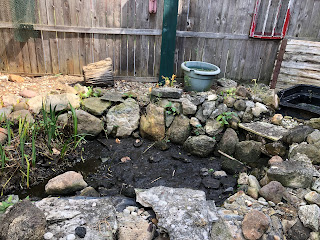
What happened was we moved into our new-old house and there was a koi pond in the backyard and we didn't want a koi pond in the backyard. Like all of the projects in our new-old house, taking out the koi pond ended up being a much bigger deal than I would've imagined at the start of-- let's call it the "Envisioning Stage." 

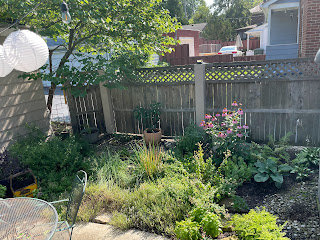
What I envisioned was not a koi pond but an herb garden. I thought it would take an afternoon, maybe two, to give away the fish, drain the water, empty out the rocks, fill the hole up with dirt and plant herbs. If it's not obvious yet, I was a ding dong. 

The actual process was longer and messier and possibly caused long term damage to my shoulder joints. It was the rocks that nearly did me in. My initial plan was to move them out of the way slightly, just enough to get at the rubber liner underneath. Cut away the lining and nudge the rocks back into the hole. 

But the hole went down so deep and there were so many layers of rocks. Some were more like boulders. Some were the size of gravel. Some was sand. Lots of sand. And where the hell was the liner? Several days into the project, without realizing it, I'd created a precarious wall of rocks just outside the mucky former koi pond, and there I was in the center, still digging in the mud. 

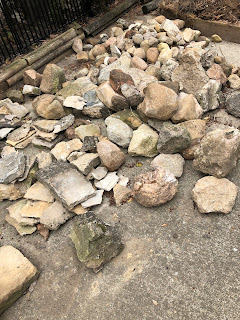
To avoid an avalanche on myself, I started moving the rocks into the driveway, first just to get them out of the way, but later, in an attempt to see what I had. How many rocks were there? What were their various sizes and shapes? A few of the rocks were interesting. Maybe I'd want to keep them for some future gardening project? Cut to: I lost myself in a several-weeks-long digression of rock organization. 

Winter came. 

The hole filled up with rain and froze, the rocks still piled up in the driveway. I was sick of looking at them. In spring I thought I might be ready to try again, but the weather was sucky. It rained a lot. Or I'd have to work. On a rare, free, weather-cooperating day, I'd climb into the hole and chuck out a rock or two, but my heart wasn't really in it. The project was starting to seem stupid. 

And then we had a global pandemic, and I needed something to think about besides the global pandemic. Why not finish digging up the remainder of the damn rocks? Cut out the liner and shove everything back in once and for all. It took a good month in which I swore a lot and pinched my fingers and scraped my legs and tried to ignore the disturbing-sounding pops and creaks emanating from my shoulder joints. 

When I was finished, a friend from work brought me herb clippings from her garden, and we stood awkwardly facing each other while properly socially distant in my driveway. The garden surprised me by taking off on its own, the small clippings rooting and spreading out to fill the space and beyond. Sometimes I sit out on the patio and try to remember the hole, the rocks-- all of that raw hard work, but truthfully, it's kind of a blurry memory, thank God. 

Anyway, this is the long way of saying that I'm halfway (who am I kidding? I'm not anywhere near halfway! Haha!) into the revision of a writing project, and all I can see in front of me are the rocks, but whatever. 

If moving rocks has taught me anything, it's that if I keep digging through them and flinging them around, eventually I'll end up with a lovely herb garden. 

The end. 

(Before)


(This is where I am now) 

(The future)

Thursday, April 26, 2018

Natalie Richards is in my head

okay, not literally, but it feels like that this week as I delve back into the revision I've been working on since last summer.  Natalie, for the record, is my critique partner, and how critique partners work, for those of you not blessed to have one, is they read your manuscript and offer suggestions for how you can improve it.

Natalie knows that I am a big baby when it comes to taking criticism, so before she sends me her notes, she calls me. You've totally got this, she says. Don't get nervous when you see the number of comments.

Um, how many comments are we talking? 

Pause. Maybe 400?

400?!

But most of them are tiny things. And the rest sort of boil down to three slightly bigger issues. But you're totally going to be able to whip it into shape. It will probably take you two, three weeks at the most...

And then she launches into the slightly bigger issues, which honestly sound a tad bigger than she is suggesting. For a few days I am afraid to peek, (also, in my defense, I was out of town. See: Adventures Getting Coffee in Connecticut) but Monday, I take a breath and scroll through.

I have a five stages of death and dying thing going on with my approach to revision. First stage, I deny I have to do anything. The book is good! Exactly how I wrote it! I'm sending it to my agent today!

Second stage. WHAT DOES NATALIE EVEN KNOW? SHE PROBABLY DIDN'T EVEN READ MY BOOK CAREFULLY! SHE DOESN'T UNDERSTAND MY BRILLIANCE! I AM NOT CHANGING A WORD!

Third stage: Okay, what if I just take care of the tiny things she was talking about first?

Fourth stage: This whole book sucks.

I call Natalie. I explain to her that I think my whole book sucks.

Stop being a baby, she tells me, and go back in there.

So I do. Which leads to where I am now with it. After a few days of timid fiddling, I am moving right along. This is the thing about a good critique partner: when they know what they are doing, their comments and suggestions are a guide.

Natalie asks me questions in her comments.

Why would the character do this here?
Wait, who is that person again? You haven't mentioned her in like, fifty pages.
Would the mom really say something like that? It doesn't sound like her.

She leaves smiley faces when she likes something. Adds an occasional LOL. Whenever I read one of these comments, I smile and lol myself.

Moving through the story with these notes scrolling along on the side, something weird begins to happen. I am not alone in my book. I am having a conversation. I argue with some of the points. I give up on others easily. How did I not SEE that? She's exactly right!

I call her and thank her profusely. Oh, shut up, she says, laughing. You do the exact same thing for me.


Wednesday, January 11, 2017

Take Two

I wrote a book in November.

Correction: I wrote the first draft of a book in November.

Okay, it wasn't a "book" exactly. More like 65,000 words molded into a book-like shape. Characters. Scenes. Pieces and chunks of scenes. A possible beginning. A foggy middle. A glimmer of an ending.

This is a typical first draft for me, my way of exploring a couple of ideas and watching, waiting for those seemingly unrelated strands to come together, wondering the whole while if they WILL come together and then marveling when they inevitably do. It's the bizarre and magical aspect of writing a story and I don't even pretend to understand how it works.

What I do know is that if I go In each day, write my words, trust the process, follow the characters and the story strands-- something will eventually spark and catch fire, and if I keep going with it, if I keep showing up on the page, pushing, while at the same time letting go and not pushing at all--

I will find myself at the end of the process with this Thing that I did not have at the beginning,

a first draft.

By definition it is a mess.

Anne Lamott in Bird by Bird calls them "shitty first drafts" and the first time I read that I loved Anne Lamott. The first draft, she says, shitty as it may be, is perfect, because it is finished. Because you made it to the end of it and now you have something to work with, something to revise.

Which is where I am now, at the beginning of the Take Two leg of this novel-writing marathon.

I'm okay with that. Even a little excited. I have methods that have worked for me in the past. Strategies.

*Put the first draft away for a while.

*Print it off in a different font from the font that you wrote it in.

*Read it. Which is always a challenge. It's hard to face this thing you wrote-- see the actual words written on the page vs the beautiful complex amazing brilliant story you had floating around in your head, and then come to grips with all of the work you're going to have to do to get the draft on the page closer to what you envision.

I take notes as I read. I write questions to myself. I make a list:

What I have/What I need

So far my list sounds like this:
What I have: characters, a voice, a back story
What I need: a plot


A few months ago I was at a party and an aspiring writer asked my opinion about revision. "I bet you don't revise as much anymore," she said, "now that you're more experienced."

I shook my head. "No," I said. "I revise even more now."

She looked at me quizzically. I could tell she didn't quite believe me. Some beginning writers assume that it gets easier. (Spoiler alert: It doesn't.)

I can't remember where I read this, but a student asks a teacher:

Do good writers revise?

And the teacher answers: Only good writers revise.

Every writer has their secrets. 

Lately, I've been thinking of revision as a kind of puzzle. I empty the pieces onto the table. I turn them over and study them. I group them by color, by shape. I click together the obvious ones, assemble the larger chunks, maybe stop every now and then to string the border, identify the corners, trying not to get overwhelmed by the pieces that don't seem to fit, all of those empty spaces that will have to be filled in eventually.

And then there's nothing to do but start writing.

Take two.


Saturday, June 25, 2016

In the Weeds


Confession:

Sometimes I am a liar when it comes to talking the Joy of Revision with my writing students. 

You can do it, I say. You can write a book. Write a messy first draft. Figure out what you have and what you need. Revise. Rinse. Repeat. 

I show them one of my drafts as an example. An array of colorful post-its. 


Look! It's not so difficult! Sometimes it's even fun! And my students nod along, inspired, I think, to try it for themselves. 

I do the same kind of thing when I talk about my garden. I post glorious close-ups of my veggies on social media. Lovely cauliflowers and darling pea pods and gorgeous purple cabbage.


It's not so hard to grow a garden, I tell my friends with less greener thumbs. Scatter a few seeds here and there. Water. Weed.  Repeat.

Okay. I don't completely lie. I admit to throwing out entire chapters, to fighting resistance each morning and girding myself to settle down to my day's writing 

to battling slugs 

But I tend to do this in a funny way. Glossing over the sweaty details. Joking about the actual WORK involved, the TIME

The worm that ate the hell out of the cabbage growing right next to the lovely cabbage picture above. 


The days I sit in front of my computer writing and rewriting the same paragraph a hundred times and then scrapping the entire thing. 

The caterpillars on my kale


The mornings I rant and whine and moan to my critique partner, 

the self-doubting--and sometimes, self-loathing

The creepy purply mold on my cauliflower


The times when I've finished up a revision of a revision and think what I have is the best piece of writing I've ever done and I send it off into the world and it sinks like a stone, unread--  or worse, read and passed on

and I wonder how I will ever find the energy or courage or discipline to start writing another story

The pathetic patch of cilantro after a heavy rainstorm


But, somehow, I do begin another story

Because it is what I do


It's what I do. 


Thursday, June 9, 2016

A Tale of Two Editing Sessions

SCENE ONE

Your lovely critique partner reads your draft and calls you to discuss big picture issues that you might want to look at as you revise. You agree with pretty much everything she says and are excited about digging in. You open the manuscript, taking note of the 160+ comments and questions that your lovely critique partner has helpfully inserted.

You begin work enthusiastically.

The End

SCENE TWO

Your lovely critique partner reads your draft and calls you to discuss big picture issues that you might want to look at as you revise. You agree with pretty much everything she says. Damn it. 

You open the manuscript, taking note of the 160+ comments and questions that your lovely critique partner has helpfully inserted and you are horrified by the amount of work that lies ahead.

But whatever. What else are you going to do with your time?

You begin work. Tightening, reworking, deleting, adding, fiddling--

move this paragraph over here where it fits better. No. Move it back. It worked better where it was originally. Delete the end of this chapter. Rework this scene. What's the timeline here? Does this flashback belong in this chapter? Why does the main character say that? What's the purpose of the scene? What's the MC's friend thinking at this point?

More fiddling and tweaking and shifting, cutting

combining, questioning,

wondering if you're fixing problems or creating new ones. Is this necessary? If you take it out, have you made things more confusing? Wait, why did you think this character was funny?

What's the point of this story? Why did you start writing it in the first place? What if you can't fix this? What if it's unfixable? Why are you a writer? What is the meaning of life? Why are-- what should-- Why didn't you-- Who cares if--


View post on imgur.com


The End

Bonus points if you can guess which scene I acted out yesterday :)


Tuesday, May 31, 2016

My Life in Drafts

I wrote the first draft of my tenth book in the winter of 2012. 

That year my son was graduating from high school and I was on the verge of a book deal but wasn't sure if the deal would ever actually go through. This particular first draft was weirdly fun to write. Book number 10! and up to that point, none of the other nine had been published! 

So mostly I was just writing for myself, month after gray wintery month, playing around with a meandery, blathery plot, a mostly stream of consciousness narrative, something I knew even then, when I "finished" it, would need a ton of work. 

But then the book deal came through, and I spent the summer editing, and in the fall I started reworking another manuscript, and then another manuscript, and meanwhile, I was promoting and traveling and teaching like crazy, and that draft from the winter of 2012 stayed tucked in a computer file, undisturbed and unread and unremembered--

--until this past fall, when I metaphorically dusted it off, took a seriously look at it, and decided it was worth a second round.

Thus began Draft 2, the bulk of it reworked during the winter of 2016. I "finished" it a couple of weeks ago, 

a few days before my son graduated from college. 

Which says something about something about time flying and wasn't it just yesterday that I was stressing about his college acceptances and word count goals and what's with this stream of conscious style anyway and how many people are coming to the high school graduation party 

and

how many people are coming to the college graduation party and does this crazy stream of consciousness style work or not and why is it taking me a week to write one scene and when exactly is my son moving across country to start his job?

I think it was T.S. Eliot who said he measured out his life in coffee spoons.

Apparently, I measure out my life in drafts. 


Saturday, May 7, 2016

Kill Your Carrots


Today I went into my garden and murdered a bunch of vegetables.

Tore the perky kale out by the roots. Sliced the lovely swiss chard. Ripped apart the darling purple cabbages. And I don't even want to tell you how gruesome things got in the carrot patch.

I hate this part of gardening.

Thinning, the professionals call it, which sounds so innocuous and easy. For those of you who are non-gardeners, thinning basically means pulling out seedlings so there is more space between plants. When I first started gardening I couldn't bring myself to do it.

So what if all of the radishes grew so closely together that they never actually, um...

grew radishes?

Over the years I've tried to get a handle on my thinning aversion by experimenting with different solutions:

1. I planted seeds far apart to begin with.  (Easier said than done... some of these seeds are teeny tiny! Some never grow in the first place and there's wasted space where a plant could've been.)

2. I replanted the "thinned" seedlings in different spots around the garden. (This requires lots of work-- to dig up a seedling, roots and all, and get it going again somewhere else. And honestly, how many vegetables do I really need anyway? Example: the garden two summers ago where I had 55 basil plants.)

3. I left everything as is, without thinning. (see above: radish plants that never grow radishes because they are bunched up too closely to each other.)

In the end I came around to thinning and that is why I was outside in my garden today killing my carrots.

Pre-thinning:

Thinned: 

And much better. (sigh)

Also, a million times easier than what I've been doing inside my home:

Over the past few weeks I've been finishing up work on the second draft of a novel. I started the revision back in September and I was confident, then, that I could whip the thing into shape by Thanksgiving. I mean, Christmas. I mean, February. I mean, Spring Break.

I mean, two weeks from now.

One of the things that has tripped me up was holding onto my first draft.

As often happens with second drafts, this book has morphed into something different from what I originally thought it was. (better, I hope!) The story tightens up. The characters come into focus. The plot crystallizes and smaller sub plots fall away. Things I thought were important in the first draft don't make sense any more. Strands. Minor characters. Dialogue I love--funny bits, heartbreaking interchanges between people I've grown to believe are real.

Entire scenes. The first fifty pages. The last. The title.

All of it-- this stuff that once worked but no longer does-- has got to go.

Oh! I do NOT want to do this!

I fight to hold onto it every step of the way. Maybe I can shoehorn in this perfectly crafted sentence Here? Maybe there's a place for this scene--at least half of it-- the one I enjoyed writing so much the first time around?

And inevitably, after much hopeful fiddling, I give up, resigned. And Snip.  

Poof.

Gone.

Now I don't even miss it. Now I can't even remember what was so great about that bit in the first place.


"In writing, you must kill your darlings," William Faulkner once said.

Yeah. Yeah. Yeah. Whatever, Bill. I know.

Tuesday, March 8, 2016

Confessions of an Arrogant Amateur

She was resistant to criticism. Disdainful to those who dared to critique her. Hostile, even.

(Although, she tried to hide it, gritting her teeth, smiling, nodding.)

She was amazed and outraged at every rejection. Why couldn't these people see the brilliance of her work? The humor? The heartbreak? The perfectly constructed, gem-like sentences?

(In her defense she was armed with degrees and experience. She had majored in English, taught writing, had written and published several short stories. Less talented writers than she had snagged publishing deals. She'd read their silly books. If they could catch the attention of an editor, why couldn't she?)

Still, she had to admit that she might be overlooking something important. Perhaps there was some secret to publishing that she had yet to discover. Perhaps, there was an essential element missing from her work...

She said she wanted someone to tell her what to DO with her manuscript. Just tell me what to do, she would lament, and I'll do it! 

(She was lying.)

What she wanted was for someone to tell her that her story was perfect exactly the way it was. When someone pointed out a problem, mentioned an area of confusion, offered--gasp!-- a suggestion, she'd think: Well, obviously they have no idea what I am trying to do here. They haven't read it carefully. This is a complicated, difficult book. They don't understand it! Blah blah blah etc.

But years of writing and submitting and being rejected had started to wear her down. One day, close to giving up, she saw a brochure for a week-long writing conference. She toyed with the idea of signing up, but wavered. Her hesitance was centered around the price tag, two thousand dollars! and for what? Workshops on Setting? Characterization? Plot? She knew all of this already! She spoke to one of the conference organizers on the phone.

I'm not sure if this is worth it, she said. I'm not a beginner. I'm on the verge. 

But even as she was speaking, confidently (arrogantly), a small scared voice in her head whispered:

If you know all of this, why aren't you published? 

She signed up for the conference. This is IT, she decided. A final effort at pursuing a dream. One last outlay of cash, of time. If she didn't get her big break, well, she'd given it her best shot.

She sent the first ten pages of her latest manuscript to be critiqued. The assigned mentor would read it and be blown away by the story. What is there to discuss? the mentor would likely say. This is perfect exactly the way it is. 

They met the first day of the conference. Not surprisingly, the mentor complimented our arrogant amateur on her writing. But then she asked several questions:

Why does your story start with this particular scene?
What does your main character want?
Where are the hints of conflict?
What is the driving question?
What--
Why--
How--
Have you tried--
Do you think--
Could you--

Our arrogant amateur could answer none of these questions. She stumbled back to her room and burst into tears.

Reality was a wave crashing over her carefully constructed wall of delusions, and she had to admit, finally, that she had no idea what she was doing.

But she wanted to learn.

Portrait of a No-Longer-Arrogant Amateur
with her mentor


Thursday, February 25, 2016

On Finding Joy inside the Hot Stove

After you purge your house, after you cart the mish mash of no longer loved furniture to Goodwill, the dining room table, the assortment of end tables and throw pillows, the knick knacks and doo-dads, the gifts you never liked but sorta feel guilty about chucking

and you cart off load after load of pots and pans and towels and old toys, the clothes that don't fit who are we kidding, the holey socks, the seventeen random charger cords (WHAT ELECTRONIC DEVICES DO THEY BELONG TO? WHO KNOWS?)

and you shine a spotlight on every nook and cranny and it's become an obsession, picking things up and knowing at once that they mean nothing to you/you won't miss them/they certainly don't give you any joy

and so you toss them away, and slowly slowly slowly the empty spaces of your house appear

drawers and closets, walls and floors, corners

entire rooms

and suddenly you realize that while it's easy to name the things that don't give you joy, it's hard to figure out what things do...

Last year I revised a book about broken people that nearly broke me. To write it, I had to go, as the writer and teacher Jane Resh Thomas said during a lecture at Hamline University-- to the hot stove and sit. I'm not saying that what I was writing was autobiographical. The book is purely fantasy. There's magic and creatures from myth. A made-up, dark and twisted world.

I was in the world for six months, rooting around and digging and churning. The people there were cruel. They betrayed each other. They were afraid.

Most of the stories I've written have been like that one. Dark. Brutal. Sad.

I'm getting to be something of an expert on how to Go In and Come Out without scorching myself. Often this involves copious amounts of chocolate after a long day of writing. Or wine. Fun, mindless TV. For example, I am on the eleventh season of Supernatural.

Anyhoo, I sent my broken people book off and who knows what will become of it and now I am knee deep in a totally different book. It's also about broken people, big shocker. But with a twist.

It's funny. There are entire sections that are... happy.

I am having the hardest damn time with it. It hit me the other day that there's a Hot Stove for Joy too. Going In means reaching back, rooting around/digging/churning in whatever is the opposite of darkness, brutality and sadness.

I guess that would be a Hot Stove of lightness, love and happiness?

So I've been looking around my kinda-on-the-empty-side house and thinking, huh. What kind of place is this? What does the furniture look like? What pictures hang on the walls?

Should there be flowers?

Sometimes I really think you are overthinking things


Wednesday, January 6, 2016

In Which I Greet My House and Express My Gratitude for My Can Opener


After I wrote a handful of blog posts about decluttering my house, people began sharing with me their own stories of decluttering. The general consensus seems to be that

1. we all have accumulated way too much crap that we don't really need
2. once you get rid of a lot of that stuff, you never miss it
3. in fact, you feel pretty darn great after the stuff is gone

Several of those people suggested I read the book The Life-Changing Magic of Tidying Up by Marie Kondo. And recently, I did. 

It's a fascinating and strange little book. 

It reads, at first, like an expanded version of a "how to organize" article in a magazine. There are tips and tricks for choosing what to keep and throw away, pointers on where to store things, pages on how to fold your clothes properly and place them in your drawer. (Don't stack! Think vertical!) 

Intermingled with stories about Kondo's history as a compulsive tidier (it began, in earnest, when she was in first grade and volunteered to clean up her classroom), and descriptions of her clients' over-stuffed homes and apartments, (she is fond of comparing messy closets to tangled up noodles).

Plus, there's a whole lotta fun, new age-y gems like these:

"Possessions that have a place where they belong and to which they are returned each day for a rest are more vibrant."

and

"Have you ever had the experience where you thought what you were doing was a good thing but later learned that it had hurt someone? ...This is somewhat similar to how many of us treat our socks."

I confess that I have never considered how my socks feel when I ball them up and stuff them in a drawer (not happy Marie Kondo tells me). Also, I don't greet my house when I walk through the door, and I fail to thank my purse and paperclips and pot holders for fulfilling their duties each day.  

But joking aside, I like Kondo's decluttering philosophy, which can be boiled down to Get rid of the things that don't bring you joy. 

This is easier said than done.

Something I learned over the course of my year of purging is that it takes energy to make the decision to get rid of things, especially when so many of those things are imbued with emotion, memories, expectation, obligation, duty, and guilt. It's overwhelming and often paralyzing to even look at some of our things, much less let them go. 

Kondo's advice is that we should "make a parting ceremony to launch [our things] on a new journey." Celebrate the occasion, she says. Tell them to have a good trip. 

It's absurd, and yet, hey! If it helps...

The book concludes with success stories of Marie Kondo's clients after they've gone through her decluttering course. Their acne cleared up! They lost weight! Something something freaky and gross about the digestive system! But she ties it together with a lovely thought:

It's not about cleaning or organizing or carting stuff off to Goodwill, "the question of what you want to own is actually the question of how you want to live your life." 

I believe you, Marie.

Last year during a particularly cold weekend, my husband I burned three shoeboxes full of old check registers and credit card statements. Okay, we did not perform a ceremony, but we did take turns reading aloud from select pages as we tossed them into the fireplace. Hey, did you know we wrote a check for $12.50 to Dominos in Memphis in 1992? Huh, remember that time we joined a gym and never went but paid the monthly fee for three years? Shoot, can you believe how little we used to pay for rent? 

Laughing and sometimes pausing to sputter out mournful nostalgic sighs, we watched our past go up in flames. 

It was a nice way to spend an evening together. 


Thursday, December 31, 2015

The Art of Letting Go

This year I let go of a lot of things.

My dining room table, for example. Also, I gave away the things that I recorded here, dutifully, for tax purposes. I just now read over the list and realize that I don't miss any of these items...except maybe the glass cheese plate?

A few weeks ago we hosted a party and it would've been nice to have that cheese plate. But oh well. We made do with another serving dish.

Shedding stuff from my house had a weird ripple effect. Once you shine a spotlight on things you've had for years and ask yourself: Do I need this? Do I want it? Really?

You might find that everything, potentially, is a candidate for the recycle bin.

For most of the year I was working on a stubbornly resistant revision. This was a book I had completely revised at least four times and for whatever reason couldn't walk away from and move on to other projects and so decided to tackle it again. There was a certain moment in the process where I broke through, a weird combination of pushing and letting go in which I shed all of my old versions, literally shoving the printed off manuscripts aside and starting on a blank sheet from page one.

But the real breakthrough was letting go of the weight of expectations, the perfectionism to "get it right" this time. I stopped caring about publication. I stopped caring if another human would ever read the story. The book became, instead, my own quest to figure out a puzzle:

What was this story about at the core of it? What was its hold on me in the first place? Why was it so important that I had to keep returning to it over and over again for the past thirteen years?

To answer these questions I had to tunnel into the past, face crap I thought I'd shed years ago, examine it again, and finally finally

cart it off to the metaphorical Goodwill in my brain and let it go.

I wrote the book but haven't found a publishing home for it, which in the past, would've made me frustrated and depressed. But here's a funny thing: I've let go of those feelings and the anxious manic pressure to achieve goals that are beyond my control.

My house is a radically different house from the one I lived in a year ago. I have books on my shelves that I love, pictures on the walls that my husband and I took ourselves. Furniture that he made (Did I ever tell you, faithful blog readers, that my husband is an artist too?)

I've started working on a new novel.

It's a messy draft, with numerous plot holes and inconsistent characters. I haven't been able to figure it out yet. There are no guarantees that when I do, I will be able to sell it. Each morning I head upstairs to my newly arranged office, surrounded by things that I love, and get to work.


Monday, December 7, 2015

On Meeting Your Goals (or NOT meeting your goals)

Soooooo, last month, like a lot of writers --specifically the 325,000 NaNoWriMo writers who signed up to write a 50,000 word novel during the month of November -- I set a goal for myself, and, um, didn't reach it.

The truth is I didn't even come close.

And it seemed like such a low-bar of a goal: write a half scene per day during the half of the days in November when I wasn't scheduled to do an event. I was confident that I'd be halfway through with my revision by now.

Ah, the me of a month ago was so adorably optimistic.

What I hadn't figured on was that each of my nine events would require preparation and each bit of preparation took exponentially more time that I'd projected. And then Thanksgiving suddenly sprang up out of nowhere, and both of my kids flew home from college, and my husband's family came from out of town to stay with us over the holiday, and I had to clean the house and go grocery shopping and make large meals, and unbeknownst to me, my husband and daughter signed us all up to walk five miles in our town's Turkey Trot Race on Thanksgiving morning, and it all turned out to be very fun and busy and lovely, but who are we kidding here?

There wasn't going to be much writing going on.

I used to beat myself up over "failures" like this. I knew the value of setting strong, specific, measurable goals (this, after spending many years setting ridiculous, vague, immeasurable goals and immediately breaking them) and I became a stickler for following the rules, harder on myself than anyone else could ever be.

If I said I would write X number of words in a particular day, then damn it, I was going to write X number of words if I had to stay up until midnight to do it.

But sometimes even staying up until midnight won't cut it, and anyway, how are you going to baste the turkey and walk five miles and make up the sheets on the kids' beds and take your son out to lunch and sit up late one night and watch a Disney cartoon with your daughter?

Somehow I still managed to write seven decent chapters and I broke through in a few sticky places and reworked the synopsis and discovered and ruminated over and solved, I think, several plot holes, and I am feeling pretty happy overall about my progress.

Soooooo yeah. Whatever. It's cool.


Saturday, October 31, 2015

My Half NaNo/Half Scene/Half Book/Half November Writing Challenge

Tomorrow is November 1st, which for many writers means the official starting date of NaNoWriMo. Midnight tonight, it's an On your mark, Get set, Go, across the world as several hundred thousand writers will attempt to silence their inner critical editor voices and bang out their 50,000-word first drafts.

Fun factoid: last year 325,142 writers, including 80,000 teens and children, signed up to take the challenge.

I'm not sure how many completed it.  Because it's freaking HARD to write a 50,000-word novel in 30 days!

Fun factoid # 2: Since 1999 over 250 writers eventually went on to traditionally publish (I assume after much revision) their NaNo novels-- Rainbow Rowell's Fangirl, Sara Gruen's Water for Elephants, Erin Morgenstern's The Night Circus... oh, and my book Thin Space (the first draft of which was crazily dashed off during NaNo, 2008)

NaNo is a fun, wild, relentless, ridiculously difficult and yet freeing ride and I halfway want to do it again this year.

But I'm not.

First, because I have just started revising a novel and, for me, revising is less about word count and more about scene work.

Also, I have a ton of other things to do. (Somehow, and I'm not sure exactly how this happened, I have nine events/presentations/writing workshops/school visits set up for this month, and now I've got to actually, um, prepare for those.)

I love the challenge-y goal aspect of NaNo though, so I have decided to craft my own NaNo-style program.

It's all about halves....

1. Revise half of a scene per
2. half of the days in November that I am not out and about presenting
3. which would get me roughly halfway through my revision

Anyone want to join me?

Pledge in the comments your Half NaNo Style Challenge, (or create whatever the heck other kind of writing goal you'd like to shoot for this month).

We'll meet back on December 1 and see how we've done.


Wednesday, September 30, 2015

The Story Whisperer

Sometimes you are writing a story and you come to a place where it doesn't work.

Or the plot that you thought you were writing, doesn't make sense anymore. Or it has a bunch of plot holes that you didn't foresee and you suddenly wake up in the middle of the night in a cold sweat and you SEE them-- all huge and dark and glaringly obvious.

Or the characters sound too much like each other. Or you're not sure who they really are or what they want (or don't want). Or they do things for the sake of the plot--because you WANT them to do those things, but one day you're walking your dog and suddenly it hits you that your characters would never do that or say that and OH MY GOD how the hell are you going to fix this?? 

Or your characters do something totally unexpected that you did not see coming and now you know it's the right thing for them to do, but that would mean ripping apart half the book to make it work and the thought of doing that freaks you out.

Or 

Or 

Or

You've reached a wall, is what I am trying to say. YOU HAVE NO IDEA WHAT TO DO NEXT.

So, if this is You--stumbling, spinning, whirring, questioning, struggling, freaking the hell out over a story-writing problem, I am here to give you the solution...

The Story Whisperer


Ha ha. There is no such person. 

But wouldn't it be awesome, if there were? I picture her as a kindly, somewhat older lady-- not the vixen-like young Muse of the Greeks. The Story Whisperer wears an over-sized comfy sweater and pajama bottoms and furry slippers. She rarely combs her hair. She can be a little crotchety. Sometimes you'll catch a glimpse of her putzing around in the background. Like a shadow. 


The Story Whisperer knows how stories are put together. Every plot variation, every knotted twisted story arc, the dead ends and false starts, the duds, the clichés. She's seen it all. She's got story strands woven into her over-sized comfy sweater and in the poofs of her poofy slippers. 

For a small fee (Pride) you bow down before her and pray for a whisper of her wisdom. 

Please, dear Story Whisperer, is what you say. I need your help. 

The next steps are guaranteed to work. Shhhh. Listen, and I will whisper them to you:

*Write out your question, your problem, all  of your story-writing tangles. (You must hand write this. In pencil.) 

*Now, go for a walk. Or take a shower. Or wash the dishes. Or if it's an extremely difficult problem, take a nap...

*Here's the tricky part: let the problem go. It's not yours anymore. It's the Story Whisperer's. Don't fear. She's got ya' covered. 

*Later that day (or next week--for the extremely difficult problem listed above) OPEN YOUR MANUSCRIPT.

And watch, as the answer, in whispery bits and pieces comes to you, like magic

...like it was there all along.  

Advice from the Story Whisperer


Thursday, April 16, 2015

Everything but the Kitchen Sink-- Also known as Trying Every Trick in the Book... To Write a Book

It's weird to write a book.

I've done it more than ten times, and I still think it's weird. I know how it works, how to do it.

[NEWS FLASH: you sit on your butt and you pick up your writing implement of choice, and you write until the book is finished.]

I can give you all kinds of pointers about how to start, where to find ideas/use ideas/develop ideas, how to plug along through a first draft, (and a 2nd draft and a 10th draft), how to outline or not outline, how to reread what you have and reorganize it and revise it, how to plot and develop characters, how amp up conflict, how to edit and polish and blah bi di blah blah.

I can also give you strategies for working through Writer's Block.

[NEWS FLASH: you sit on your butt and you pick up your writing implement of choice and you write--even though you hate what you're writing and hate writing and probably hate yourself. Do that for 20, 30, maybe 56 days, and I promise, you'll break through Writer's Block.]

Yeah. So I KNOW ALL THAT. And yet, apparently, I must bow down humbly before the Muse and admit that I KNOW ABSOLUTELY NOTHING when it comes to writing a book, specifically, the book I am writing now, which is technically a revision, my fifth or sixth complete time through it.

It's a strange complicated dark expansive personal story that seems to get bigger and more complicated every time I pick my way through it.

I heard the brilliant writer and teacher Jane Resh Thomas speak at Hamline University when I visited the MFAC program in January and she said that when you write a book, you are not the same person you were when you started it. You're exploring parts of yourself--some parts, that maybe you would rather not explore. Because I have basically been writing this story for more that 12 years, let's just say that I am doing a lot of exploring of the dark and dusty recesses of myself.

And here's one thing I figured out:

All of my old strategies for writing a book-- the word counts and the daily goals and the typing on my lap top and the index cards-- none of that seems to be working with this one. So I decided-- what the hey?-- why not try something new?

Forget the damn laptop. I've been writing by hand. With a pencil. I'm filling up composition notebooks, something I haven't done since I was twelve.
(two of many notebooks. Plus a to-do list
with the first item:
NO INTERNET UNTIL 3) 

I hand write in the mornings and type and revise in the afternoon. I take a lot of breaks. When I'm stuck, I clean something in my house or throw something out or clean something and then throw it out.

This book takes place partly in a forest and every time I get to a place where I have no idea what the characters are doing or thinking, I start describing trees. I have hundreds of pictures stored on my computer. Types of trees and leaves and fruit and bark. I have pieces of bark on my desk.

(there are satyrs in my book too. Satyrs are from Greek
mythology and they have tails and they
like to chase nymphs. Look at the one I painted
with watercolors. Note: the privates are modestly
covered by leaves) 
I'm doing yoga again. (wearing yoga pants has inspired me.) I'm gathering stones and creating altars and burning candles and staying off social media and walking the dog multiple times and binge watching Supernatural and painting with water colors.

I'm terrible with water colors and I don't care. I also don't care about publication anymore. Or sales numbers or sequels or self promotion or marketing. I do some of those things, sure, but this book comes first. It may never be read by anyone except for a few close friends. And get this: I don't care. 

In the mornings I change out of my pajamas and into my yoga pants and I park my butt on the bed in my office/guest room where I've been working, and I pick up my pencil and write.


Friday, February 27, 2015

Excavating the Past --Also a word about 19th century outhouses in Cincinnati

The other day the guy at Goodwill scolded my husband and me. Apparently when you have a bunch of crap bigger items to drop off at one of their centers, the proper procedure is to park in the front, go inside and announce what you have, and then drive around to the back to unload.

My husband had done this the day before, but today we were trying to expedite the process and thought we'd just go directly to the back.

DO NOT DO THIS, PEOPLE. The guy expressed his annoyance with us several times, accompanied by weary sighs and exasperation at our not following the rules. The entire time we were unloading the back of a pickup truck-- a coffee table, a TV stand, a computer desk, five garbage bags of clothing and toys and games-- we apologized to him for his generosity.

"Okaaaaay," the guy said, as he helped us cart the stuff inside, "we'll take it this time, but next time..." his voice trailed off and husband and I apologized once more.

Then we got back into the truck and burst out laughing. Barred from donating to Goodwill. Is that a thing? Well, whatever. There are other Goodwills in this city, buddy.

What began as a half-day project to dust the book shelves in my office has turned into a complete excavation of every single item in our house. Do we WANT this thing? Do we LOVE it? Do we USE it? Maybe we liked it once but we can't remember why and now it's just taking up space... Maybe it was a gift we never liked but thought we should?

Absolutely everything is on the table both literally and figuratively--including the table.

We are ruthless. Pulling stuff out of a closet and chucking it into bags without a second thought except annoyance at ourselves for keeping these things.

OR

We are slow and weepy. Look. Our son made this when he was in kindergarten. Our daughter carried this little purse around when she was four. Oh!! My grandmother wrote me this letter. My aunt made me this doll when I was a child. My husband wore this shirt on our honeymoon. I used to love this dress so hard but couldn't fit into it now to save my life, also my daughter now informs me that it is hideous.

There are decisions to be made about every single thing: Trash? Recycle? Goodwill? Keep-- but if you keep it, where do you put it?

I read somewhere that these items are called touchstones. The moment you unearth them, the moment you turn them over in your hands, you have the story, the memory, the emotion. These items are haunted in a sense, by loss (my grandmother made this quilt!) by grief (my child chewed on this toy and now he is in college and that baby he was is lost forever) by love  and joy and weirdly, fear.

It's hard to let go of things. Take the computer desk dumped off at Goodwill the other day. To the objective eye, it is nothing but a piece of cheaply made furniture. Decent condition. Still has some use. But I know where we bought it (Target) and when-- two houses ago when we lived in Lexington, KY. I know that we had it set up in our den by the window and it held the only computer in our house. Our son played video games at that desk and our daughter typed out little stories. I wrote a book sitting at that desk.

When we hauled it up from the basement, where it was now gathering dust and half begged Goodwill to take it from us, we were cutting a small cord to the past.

My wise friend Deb says that excavating our house as we have been doing, giving things away and throwing stuff out, making decisions about what to keep and what to cut loose-- is a way of accepting our own mortality. We hold onto things because they have become extensions of us. Parting with them is parting with pieces of ourselves.

We live with this illusion that we will live forever, that we can gather and collect and buy and take in households of things forever. We stuff things in our closets and our dresser drawers and cabinets and basements and attics. Some people rent storage lockers to hold the things that won't fit inside their homes because they can't bear to part from them. I have a relative who only gives friends her things so she can still visit them from time to time.

In the end, we can't take any of it with us. And those things that hold even the smallest hint of value, of memory, of emotion, return to merely being things.

Someone will buy that computer desk at Goodwill and will have no idea where it came from, who it came from. Someone will pick up the handmade doll. The lovingly sewn quilt. Old pictures still in their frames and say Who are these people? 

No.

If they say anything at all, it will be Who WERE these people?

There's an awesome exhibit in the Cincinnati Museum Center:the items found in an excavated outhouse from the 19th century. A team of anthropologists discovered the old privy and carefully dug into it, dusting off items in the careful way you imagine they'd dig up dinosaur bones or Native American pottery shards. There's a display at the museum of the items from the outhouse, organized by layer. Those found out at the bottom and preserved in --ugh, I guess, calcified human waste?--- are the oldest.

(Peeking into the Privy Hole) 

Weird things. Bits of china, children's toys, forks, medicine bottles, toothbrushes.

You look at the stuff and think: how the hell did that get thrown down into an outhouse hole? Kids playing with marbles while they did their business. People brushing their teeth and eating? Things accidentally dropped? Can't you imagine a kid dropping a toy and having a tantrum about it? Or maybe some of things were thrown in purposely. Damn it, Millie, I always hated this china from your mother!! Or, oh my GOD I broke Millie's mother's heirloom china saucer. Let me throw it down the toilet hole before she finds out.

There are stories behind these things. But we will never know the stories. People owned the dishes. Used the toothbrushes. Loved the toys. Hated the medicine bottles. Now none of it has any meaning at all except for anthropologists and museum goers.

Those 19th century people let go of their things.

And now it is our time to let go...


---------------------------------------------------------------------------------------------
For the record, (and for tax purposes) the list so far of things Goodwill has graciously allowed us to give them, in no particular order:

20 pillows
2 chairs
1 set of Polly Pockets
11 pictures
1 pitcher
3 jewelry boxes
13 scarves
2 sets curtains
3 child's purses
assorted stuffed animals
6 hats
1 sweat jacket
1 woman's coat
1 lamp shade
6 wicker baskets
1 small refrigerator
1 mirror
1 radio/cd player
18 candle holders
2 sugar bowls
1 harmonica
25 games
2 baseball mitts
2 guitars from Guitar Hero game
1 queen-sized comforter set
1 double sized comforter
1 double sized sheet set
1 area rug and rug pad
2 computer keyboards
assorted jewelry
2 computer desks
3 hand towels
5 wash cloths
5 T-shirts
25 teen shirts
4 blouses
9 sweaters
1 dog sweater
2 dresses
1 pajamas
2 dolls
12 mugs
1 jump rope
1 TV stand
1 coffee table
1 tape recorder
1 pair of jeans
1 wine container
1 table runner
1 pair ski pants
1 tea towel
1 beer mug
8 pants
2 art supply sets
10 pairs of shorts
1 Barbie
104 books
9 candles
1 bowl of beaded fruit
2 watches
1 baseball hat
1 backpack
3 piano books
2 wallets
5 bracelets
3 headbands
4 canvas bags
1 bikini
5 pairs of socks
1 keychain
2 watches
2 calculators
14 knick knacks
12 puzzles
1 ten-foot computer cord
1 wooden plate
1 glass cheese plate
1 glass plate
2 trays
2 end tables
1 cd holder
1 electric mattress pad
1 shin splint
1 Vera Bradley bag
1 filing cabinet
1 sofa table
2 lamps
1 stapler
3 bathroom rugs
2 easter egg trees
1 baseball bat
1 baseball glove
1 deviled egg tray
1 rain poncho
12 pairs of shoes
5 videos
1 nightlight
2 soap dispensers
1 glass vase
1 silver thermos
4 fake plants
2 bookends
3 sculptures
1 tablecloth
7 cloth napkins
3 sweatshirt
2 bar stools
1 laundry sorter
1 bolt of material
1 cake stand
1 metal hot plate
1 nativity set
1 queen sized sheet set
3 blankets
1 quilt
3 twin sized sheet sets
1 graduation gown (sorry, Ben!)
11 pillow cases
Sunday, February 8, 2015

In Which I Excavate My Life and Discover the Secret of Time Travel

My quest to clean out my office, which led to a shedding of unread books from my bookshelves, which led to a shedding of pictures I never liked and knick-knacks that serve no point except to gather dust, which led to a giant Goodwill-designated pile on my dining room table...

which led to my decision to get rid of my dining room table-- that quest continues.

Over the past week I have taken three carloads of stuff to Goodwill. Fake plants and no longer used glassware and lamps and end tables and clothes and shoes and more books. Each time I am afraid the Goodwill volunteer is judging me and judging my stuff and one of these trips he's going to say, No more, lady. We're through taking stuff from you. 

If that happens, I will have to find another Goodwill.

I've been wandering around the house, shining a spotlight on things I haven't looked at in years. Instruments the kids no longer play. Candlesticks I don't use. An ugly wall hanging that matched better in an old house and never looked right on the wall in this new house, and yet it's been hanging on the wall anyway for seven years. 

Yesterday, my goal was to clear out my office closet and that morphed into emptying the entire linen closet in the hallway and discovering that we own nine extra pillows and multiple sheet sets for double beds. (For the record, we don't have double beds.) 

I am excavating our lives. 

Opening drawers that I never open and peering into closets. I am finding old pieces of my life and hurtling back into time and sometimes I like going back, and sometimes I want to slam the door and forget what I've found. 

Why do objects hold so much power? 

Why does one glimpse send me into a tailspin of emotion? 

Why did I hold onto these things? 

How can I let them go? 

Yesterday I found a viking ship collecting dust on my closet shelf.

I see the viking ship, and I am like Harry Potter dunking my head into Dumbledore's Pensieve. I fall under the surface of the "viking ship as object" and SEE

my little boy, age 3. Insatiably curious and talkative and brilliant and every day wanting to know everything and asking me a never-ending stream of questions until I think I might lose my mind.

I see a book from the library on Vikings. I see me reading it to my little boy and I see us making the viking ship. He paints the boat and I make the 26 tiny toothpick paddles and fit the whole thing together. 

I see us at the counter in a house we lived in several houses and several states ago. My little boy's sister is sitting on the floor playing with a drawer full of plastic bracelets. While I stick the flag onto the viking ship, she slips the bracelets on her arm and then holds her arm out and admires herself.  

All the while Scooby Doo is on TV or Zooboomafoo or Reading Rainbow. 

I am home alone with these two little kids and we have just moved from out of state and I know no one and I want so much to be a good mother, the kind that reads books to her kids and makes elaborate crafts projects with them and cooks them nutritious meals and answers every single question they have. 

And NOT the kind of mother who feeds her kids hotdog chunks and puts the TV on all day, who craves adult conversation and sometimes hides in the bathroom to have five minutes of quiet away from incessant little voices and plastic beads and Scooby Doo laughing like the idiot dog that he is. 

The viking ship is a stunning achievement of mom and son bonding and enjoyment and love. 

And at the same time, it is a symbol of extreme motherly boredom and stunted blunted creativity that has no outlet except in meticulously crafting 26 oars out of toothpicks like a obsessive compulsive loon. 

When we are finished making it, my son and I, his little sister looking on with wide eyes and draped in plastic bracelets, we place it carefully on a shelf in his bedroom. It moves with us to another house and another house always displayed in my son's bedroom until somewhere along the way, after another move, my son is doing a purge of his own, and says he doesn't want the viking ship anymore. 

He does not remember making it, except in only the vaguest sense. He does not remember being three year old. And his baby sister does not remember draping her arms with plastic bracelets. 

I put the viking ship in my closet on a high shelf because I am cannot bear to part from it, because I cannot bear to let go of the memory of Scooby Doo and hotdog chunks. 

I cannot bear to part with a long ago self and place and life. 

Yet.

Or maybe ever. 


Wednesday, September 24, 2014

My Eureka Re-Vision Moment (with a fun look at other writers' visual snapshots of their revision processes)

I mentioned last week that when it came to being on the receiving end of a critique, I was a weird mix of anxiety and arrogance. My inability to take criticism is one of the reasons why it took me so long to break through and get that first publishing deal.

Another big thing that tripped me up was my misunderstanding of the revision process -- and by "tripped me up" I mean "took me 15 years." (during which time I wrote and "revised" 5 books)

Arrogance. I knew how to write. I'd been writing since I could hold a pen. I majored in Creative Writing in college. I worked on a freaking MFA in Poetry.

Arrogance. I knew how to write a short story. I had stories published, damn it.

Anxiety. --that naggy voice in my head whispering: "If you know so well how to do this, why isn't it working for you?"

A little background on my Revision Process--such as it was--from my teenage years up to six years ago:

I wrote something. I fiddled around with it. I edited it. DONE

And when I started writing books:

I wrote a sentence. I fiddled with that sentence until it was perfect. I moved on to Sentence Two. I made it to the end of one of these beautifully constructed sets of sentences and prided myself on what I had. Not a first draft, but more like a 3rd or 4th draft. Immediately, I sent this brilliant gem of a manuscript out to editors and agents....
              ...and collected a nice pile of rejections.

The turning point came six years ago when I went to a Highlights Foundation workshop on revision and the speaker suggested putting the completed first draft away (because this is what it is, folks, no matter how polished, a FIRST draft--your very first time through the story from beginning to end.) Let it sit for a month or two. Print it off in a different font (That little tidbit in and of itself was worth the price of admission for me) and read the thing through as a whole completed story.

Revision means literally Re-Vision-- looking at your story, again, and seeing what you actually have there. THE BOOK on the page. And not the book you imagined. (Sigh) (I will note here that even now when I read a first draft through from beginning to end, I feel intense waves of nausea as I contemplate how crappy it is and how much work I have yet to do.)

There was more illuminating information thrown at us during that session and I took notes like a maniac trying to get it all down, light bulbs popping in my head. In all my years of writing I had never thought of revision like this before.

And no wonder.

I had been trained at writing short stories. I can keep a short story--the entire thing-- in my head at once. If I wanted to (not that I ever did), I could print off the pages and arrange them on my dining room table and look at them.

You can't do that with a book.

It's really really hard to keep an entire book-- all the plot strands and character arcs and scenes and bits of dialogue --in your head at once. Even if you are an outliner (I'm not) your draft may drift away from you, meander off in different directions, gallop toward some other story (maybe a BETTER story) than the one you envisioned when you started.

I don't care how beautifully written each of your sentences are, when you get to the end of a first draft, it is still a first draft, and if your drafts are like mine, they are a mess. (See intense waves of nausea, above)

This past weekend I presented a session at a regional SCBWI conference on how to move from a messy first draft toward what will eventually be a draft that you can submit to an agent or editor. Something I know now, that I did not know six years ago when I shuffled into that revision workshop at Highlights, is that there is no one right way to Do This. And my way--the way I eventually figured out through trial and error and lots and lots of crappy drafts-- is not the only way. In fact, with each book I have to figure out the process again.

I won't bore you with all the details, unless you're interested-- and in that case, email me and I'll send you my latest method  jodycasella (@) yahoo (.) com

In the meantime, for your visual pleasure, take a look at some other writers' snapshots of their writing and revision process:

(Erin Dealey)

(Jennifer Salvato Doktorski)

(Bill Thomas)

(Liz Coley)

(Natalie D. Richards)

(Stephanie Kuehnert)

(Kristina McBride) 

(Mindee Arnett) 

(CJ Flood)

(Jennifer Mann)

(Kristy Boyce)

(Claire Caterer)

(Kristi Belcamino)

(Crissa-Jean Chappell) 

(Nova Ren Suma)
(William Faulkner)

Oh yes. That's William Faulkner, one of the great American novelists.

Even old WF needed a little help with revision. The story is his wife wasn't too thrilled that he'd scrawled some of his draft... on the walls of their house.


PS. A HUGE thank you to all of the writers above (including William Faulkner) for sharing their revision processes with me!!