Showing posts with label Writing process. Show all posts

Sunday, February 13, 2022

Moving rocks around my yard

is like revising a piece of writing. Or rather, I guess I should say, revising a piece of writing is like moving rocks around my yard. I don't know how to talk about the writing process except by comparing it to some other activity, otherwise it sounds like this: I wrote a thing. I took it apart. I put it back together. Let me tell you about the rocks instead.

What happened was we moved into our new-old house and there was a koi pond in the backyard and we didn't want a koi pond in the backyard. Like all of the projects in our new-old house, taking out the koi pond ended up being a much bigger deal than I would've imagined at the start of-- let's call it the "Envisioning Stage." 

What I envisioned was not a koi pond but an herb garden. I thought it would take an afternoon, maybe two, to give away the fish, drain the water, empty out the rocks, fill the hole up with dirt and plant herbs. If it's not obvious yet, I was a ding dong. 

The actual process was longer and messier and possibly caused long term damage to my shoulder joints. It was the rocks that nearly did me in. My initial plan was to move them out of the way slightly, just enough to get at the rubber liner underneath. Cut away the lining and nudge the rocks back into the hole. 

But the hole went down so deep and there were so many layers of rocks. Some were more like boulders. Some were the size of gravel. Some was sand. Lots of sand. And where the hell was the liner? Several days into the project, without realizing it, I'd created a precarious wall of rocks just outside the mucky former koi pond, and there I was in the center, still digging in the mud. 

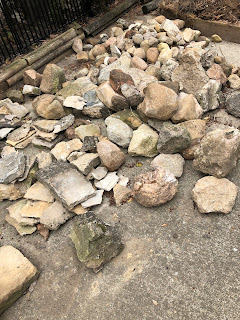
To avoid an avalanche on myself, I started moving the rocks into the driveway, first just to get them out of the way, but later, in an attempt to see what I had. How many rocks were there? What were their various sizes and shapes? A few of the rocks were interesting. Maybe I'd want to keep them for some future gardening project? Cut to: I lost myself in a several-weeks-long digression of rock organization. 

Winter came. 

The hole filled up with rain and froze, the rocks still piled up in the driveway. I was sick of looking at them. In spring I thought I might be ready to try again, but the weather was sucky. It rained a lot. Or I'd have to work. On a rare, free, weather-cooperating day, I'd climb into the hole and chuck out a rock or two, but my heart wasn't really in it. The project was starting to seem stupid. 

And then we had a global pandemic, and I needed something to think about besides the global pandemic. Why not finish digging up the remainder of the damn rocks? Cut out the liner and shove everything back in once and for all. It took a good month in which I swore a lot and pinched my fingers and scraped my legs and tried to ignore the disturbing-sounding pops and creaks emanating from my shoulder joints. 

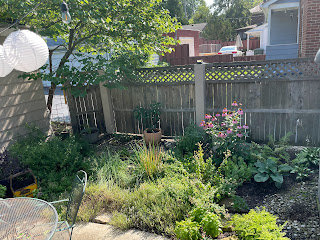
When I was finished, a friend from work brought me herb clippings from her garden, and we stood awkwardly facing each other while properly socially distant in my driveway. The garden surprised me by taking off on its own, the small clippings rooting and spreading out to fill the space and beyond. Sometimes I sit out on the patio and try to remember the hole, the rocks-- all of that raw hard work, but truthfully, it's kind of a blurry memory, thank God. 

Anyway, this is the long way of saying that I'm halfway (who am I kidding? I'm not anywhere near halfway! Haha!) into the revision of a writing project, and all I can see in front of me are the rocks, but whatever. 

If moving rocks has taught me anything, it's that if I keep digging through them and flinging them around, eventually I'll end up with a lovely herb garden. 

The end. 

(Before)


(This is where I am now) 

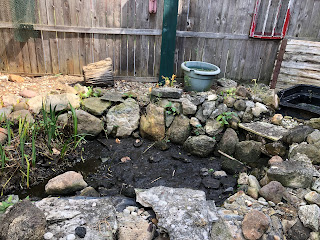
(The future)

Thursday, April 8, 2021

Interview with Kristy Boyce, Author of Hot British Boyfriend

If there is such a thing as the perfect book as an antidote for the times (the times being a dark pandemic year of anxiety and fear and no travel) then I have found such a book. It's light, hopeful and all travel; specifically, it's about a teen girl on a semester abroad trip to England. Throw in two cute boys, visits to fun touristy sites, our heroine finding her way and learning to be true to herself and her passions, also, a sprinkle of pixie gardens, and honestly, what else can we ask for? 

What makes it even more lovely is that I know the writer-- Kristy Boyce is a long-time friend, the very first writer I met when I moved to Ohio and ventured out to my first writers group meeting. Her journey to publication was long and windy and littered with setbacks and rejections, but she kept plugging away. 

Now her first book is out and making a splash and I am absolutely thrilled to sit down with her (virtually, of course) to hear more about her behind-the-scenes journey. 

Jody: Kristy, I adored this book, and I am so happy for you, and when this is all over, I am going to hug you so hard! Gushing out of the way, where'd you get the idea for Hot British Boyfriend?

Kristy: My original idea came when I was writing a multiple choice question for a psychology class I teach. The question was testing when we are most likely to show our true self to others versus when we’re likely to show a more perfect version of ourselves. I wrote an application question about a girl who studies abroad and then I sat back and thought, “That would be a fun book to write!”

Jody: I love that this all distills down to a question on a psych test. When was this?

Kristy: I took my first notes on the idea in 2014, so it really has been a long road! After writing and revising it, I took the novel to the Highlights Foundation Whole Novel Retreat in 2017. My mentor there was Nancy Werlin, who gave me a ton of wonderful advice. I revised again based on that feedback and then queried the manuscript, but I didn’t receive any agent offers. 

Jody: Which is always a huge letdown after so much work.

Kristy: It was rough because I really believed in Hot British Boyfriend. I debated putting it away and starting on something else. Instead, I decided to give the book one more shot and applied for PitchWars, an online mentorship program. Thankfully, I was accepted and spent the next four months doing another two big rounds of revision with my mentors. That led to me signing with my agent after PitchWars and then doing two more rounds of revision with my editor before the manuscript went to copy edits. 

Jody: This sounds like lots of revision.

Kristy: Lots. I guess one thing that was surprising was how many times a person can rewrite a first page and a first sentence. My PitchWars mentors and I went over those first paragraphs again and again. I learned so much during all of the revisions and became a much stronger writer. 

Jody: I heard you talk about this at the time. The ups and downs and close calls. Was it hard to keep going with the project? 

Kristy: That was probably one of the most difficult parts-- to keep believing that the novel had promise even after getting all of the rejections. I sometimes wondering if all the work would be worth it, but it absolutely was. 

Jody: And you couldn't see it then, but maybe it just wasn't the right time for the book? A few years ago many readers were clamoring for darker, angstier stories. Now--maybe, not so much. This year, of course, has been something else.

Kristy: This is true. I was finishing up edits on Hot British Boyfriend throughout the beginning of the pandemic and I loved being able to fall back into this happier world full of travel, friends, and romance. I’m always mentally healthier when I’m writing and that was definitely the case during 2020! It was a wonderful escape. I think, if anything, the times we’re living in have prompted me to dig in deeper to the joyful stories that I’m already inclined to write.

Jody: Any writing tips or tricks to share with aspiring authors?

Kristy: Hmm, well I’ve recently been fast-drafting a new YA and I do have a few tricks I’ve come up with for that process. I really like to finish my first drafts quickly (in a month or so), but I’ve found that if I’m sitting at my laptop then the words are slow to come. I’m particularly liable to second-guess every choice, get caught up on small wording issues, and generally procrastinate. So, I trick my brain into writing in various crazy and chaotic ways! 

Jody: You gave a talk to our writing group about how you dictate to yourself when you take walks, using the microphone feature on your phone. This was a game changer for me!

Kristy: That is my absolute favorite trick. It's amazing how much more creative I feel when I'm moving instead of sitting. Here's another one: Sometimes I’ll cover my screen with a notebook so that I can type without seeing what I’m writing. I have also—prepare yourself—turned my font color white so that I can’t see the words as I’m typing them. 

Jody:  Ooh! I have to try this! Actually, I want to try this RIGHT NOW! But before I do and let you go, what's up next for you? 

Kristy: I’m thrilled that HarperTeen has bought a companion novel to HBB! It follows Ellie’s roommate, Sage, when she travels to Amsterdam the summer after high school graduation. The title is Hot Dutch Daydream and it’s scheduled to come out in April 2023. 

Jody:  This is so exciting, Kristy! And can I just tell you again how happy I am for you and how much I want to hug you?

Kristy:  :) 

Jody: Readers, would you like a signed copy of Hot British Boyfriend? To enter, leave a comment below, mentioning a place you'd love to travel. Contest open until April 17, 2021.

For more on Kristy and Hot British Boyfriend:

-----------------------------------------------------------------------------------------

Kristy Boyce lives in Columbus, OH and teaches psychology as a senior lecturer at The Ohio State University. When she’s not spending time with her husband and son, she’s usually writing, reading, putting together fairy gardens, or watching happy reality TV (The Great British Bake-Off and So You Think You Can Dance are perennial favorites). 


Where you can find her: 

Kristyboyceauthor.com

Twitter at @KristyLBoyce

Instagram @kristylboyce 

Where you can find Hot British Boyfriend:

Cover to Cover Bookstore

Barnes and Noble

Amazon


Monday, April 25, 2016

Day by Day, good Day

Nearly five years ago I'd hit something of a low point in my writing life. My manuscript Thin Space had been floating around the publishing world for a year and a half. "Floating," for the record, in publishing terms, is actually a nice way of saying "Sitting unread in multiple editors' inboxes."

Then my agent quit the business. 

During that floating time, I'd written a sequel to Thin Space. Also, two other novels, companion books of sorts, set in the same dark weirdo mythological world. I started a third that winter.

The book was about a boy who wanted SO MUCH to have the powers and talent and special gift that his family members and friends had. But, alas, it wasn't happening for him. Still, he refused to quit. Consumed by the quest to transform himself, he set about trying to MAKE THIS THING HAPPEN by logically approaching the problem-- devising a plan  and checking off items on his checklist. Practicing. Exercising. Stubbornly refusing to stop despite every setback. 

He was a trooper that little guy.  

The parallel to my own situation was pretty clear to me and somewhere over the months of writing I could see that the book had morphed from 

Boy Makes Dream Come True Out of Sheer Willpower 

into 

Writer Comes to Terms with a Failed Dream. 

By the time summer rolled around (and my agent quit) I was torturing the poor boy. But for whatever reason, every day, despite the growing futility of the endeavor, I parked my butt in the chair and wrote the latest installment of this idiot kid as he pursued the dream we both could see was never going to come true.

30,000 words. 40,000 words. I was writing the Five Stages of Death and Dying. Accept it, I wanted to tell the boy. Get a grip. Move the F on. 

50,000 words. 60,000. I kept writing. What else was I going to do with my time? 

70,000 words. 80,000. 90,000... The plot, if there had ever been one, had long since fallen apart. The story was meandery and repetitive and pointless. I kept writing it. 

I think it was the end of August when it hit me. Something was happening to this kid. All of his work and crazy determination had gotten him somewhere. Strangely, it was not the place that he'd been striving toward. 

He was no longer afraid. No longer consumed by his quest. He was not the same boy he'd been at the beginning. Somewhere along the way, he had been transformed after all.

I finished the book and never looked at it again. 

A few weeks later my second agent told me that there was serious interest in Thin Space and if I could hold on for a bit longer, I might have a book deal. (spoiler alert: it took 6 more months before that happened). In the mean time, while I was almost manic with anxiety and frustration and worry, I did the only thing I knew how to do. 

I wrote another book. 

Last week I went to the Columbus Museum of Art. On a wall in one of the galleries there was a row of pictures, what looked like the same empty glass. The artist is a German man named Peter Dreher. Apparently, those paintings are the representatives of over 5,000 that Dreher calls his magnum opus, Tag um Tag guter Tag (Day by Day good Day). 

Every day since 1974 Dreher has painted the same empty water glass. Basically, it's the guy's practice. Wake up, paint a painting of the same glass. He's done it at least 2,500 times during the day. He's also created 2,500 paintings of the same glass at night-- because hey, why the hell not? 

In case you're wondering, he does other things besides paint the same glass. 

Over the next few weeks I am finishing up a revision of my tenth book. I haven't sold my two weirdo mythological world books. Or the sequel to Thin Space. I still have never opened the 100,000-word first draft of the Boy Who Refused to Quit story. 

Oh, I also no longer have an agent. 

When I finish my revision I will query it, which may or may not snag an agent's attention. If I do snag an agent's attention, he or she may or may not be able to snag the attention of an editor. 

So, all of that is up in the air. 

But here is what is NOT up in the air: 

as this tenth book floats around in the publishing world, I know with absolute certainty what I will be doing. 

I will be writing. 

each day
every day 

good day  


Monday, February 8, 2016

Motivation Monday

I am sitting in my kitchen looking out the window at the rain spattering the puddles in our muddy backyard. The sky is gray. The trees are bare.

It's Monday.

9:17 am, and I have not yet opened my writing file to begin my day's work. Here's what I have done:


  • made breakfast and cleaned up breakfast 
  • did a load of laundry 
  • scrolled through emails 
  • balanced the checkbook. 
  • attempted to get the dog outside to do her business but she didn't want to do her business because it is raining and she is a little goofball who does not like to get wet and now I am watching her warily and keeping an eye on the rain, waiting for it to let up a bit so I can try again
  • writing this blog while watching the rain, which curiously has turned into snow. Hmm. Is the dog afraid of snow? Let's find out, shall we?
  • 9:22: Ha! Success!

Yesterday a teen writer interviewed me for a school project. Where do I get my ideas, she asked? Why do I write stories and books for young adults? What's the most difficult thing about writing a novel?

The last question tripped me up. I blathered about the writing process. The pros and cons of writing without an outline or writing with an outline, and some things I've learned along the way about revision, and how there's no one right way to write a novel but you've got to be open to trying different methods and blah blah blah.

And then I realized I hadn't actually answered the question.

The simple truth of the matter, distilled down to the essence, is THIS:

the most difficult thing about writing a novel is writing the novel

every day, every moment of some days, it is you, the writer, sitting down with a blank sheet of paper or a cursor blinking on a computer screen, willing yourself to begin, taking the leap of faith that you can do this, again, write the next sentence, the next paragraph, the next scene

accepting that what you are doing is imperfect and will definitely need to be revised, trusting that you will reach the end, eventually, if you keep working steadily, day after day, and accepting the final outcome--that when you do reach the end--

there is no guarantee that anyone beyond a small lovely circle of friends will ever read the thing

and making peace, each moment, each day, with that fact

and writing anyway.

(or not)

I hate to tell this to beginning writers, but it does not get easier, with each sentence, each page, each book. But somewhere a long the way, if you are lucky, you will come to the conclusion that you write because you want to or need to and/or can't imagine not writing (and you know this because you've tried not writing and in the end always returned to it).

Update:

It is now 11:55 and I've been to a doctor's appointment, eaten lunch, cleaned the lunch dishes, walked the dog (it's no longer raining or snowing), answered several emails...

and in the next two minutes I will wrap up this blog.

I will add a picture.

Here


a blank screen--waiting for the day's words

and begin my day's work

Now.


Monday, November 16, 2015

Interview with Nancy Ohlin

I'm so pleased to welcome fellow YA Outside the Lines blogger Nancy Ohlin to On the Verge this month. Nancy's third YA novel Consent was just released last week, but I was lucky to have a sneak peek. The novel--which is about a teen music prodigy and her relationship with her teacher as it crosses the line into something physical-- is riveting and a little horrifying.

Jody: This book, Nancy, I've got to tell you: it pushed my buttons in a way that few books do. I think my reaction is a mixture of remembering vividly what it's like to be a teen--and feeling as if I knew everything about everything--but also, now, being the mom of a teen daughter and knowing keenly that kids this age don't know as much as they believe they do. And here's this guy--the teacher--taking advantage of that! Where did the spark of this story come from?

Nancy: I wanted to write a novel based on a (bad) personal experience.  But over time, the story did a 180 and morphed into a totally different book with totally different characters.

Jody: It's interesting when that happens-- a story taking off like that. Do you find that most of your work starts with something true?

Nancy: Not always. Every day I get sparks of inspiration from the most random things: someone I run into at the grocery store, a car passing by, a song on the radio. I actually have files and files of book ideas that I want to write up in the future.

Jody: Once you have your idea or two, what's your next step?

Nancy: I start with a central idea or a character.  Then I sit down with a notebook and write down a bunch of stuff—it’s a lot of brainstorming and free-associating, like, “she has a scar on her face!” or “he hates pizza!” or  “the Nile River!”  Also drawings and charts and maps and such.

Eventually, these crazy ramblings start to form the beginnings of an outline.  Then I outline.  Once I get into the first draft, though, I tend to wander away from the outline and lose myself in the weeds. This process is very me:  a marriage of chaos and order.

Jody: I like that, and I like that you seem to understand and accept your process. That's been one of the harder things for me, figuring out how I work, knowing when to push and when to let go. It's taken me years. Have you been at this for a long time?

Nancy: I actually started my writing career as a ghostwriter. An editor friend gave me my first big break and hired me to ghostwrite for a children’s mystery series.  That gig led to many others.  It took a while for me to write and publish my own original novels, though.

Jody: How many books have you ghostwritten?

Nancy: Something like eighty books.

Jody: Wow! That's amazing. I guess you would figure out your process after that kind of track record. When you started writing your original novels, was it easy to break in or did you still collect a few rejections along the way?

Nancy: Oh, I got rejections. That time is all one big blur, so I'm not sure how many. The acceptances, I definitely remember, because they involved much screaming and happy-sobbing on my part.

Jody: Switching gears a bit here, but what's your work schedule like? Do you try to write at a certain time each day? Write for a certain number of hours or complete a certain number of words?

Nancy: I like to write in the mornings, either at home or at the library or in a café with some of my writer friends.  I try to stay off the Internet, but that’s not always easy.  If I hit a block—e.g., if I’ve been staring at my computer screen for half an hour—I make myself get up and do something else, like taking a walk or riding the exercise bike and watching old Scandal episodes.

When I’m on deadline (or multiple deadlines), I work anywhere from six to twelve hours a day. When I’m not, my ideal is four to six hours (or better yet, no hours and spending the entire day at a spa—but sadly, this rarely happens).

Jody: You sound like you're pretty busy.

Nancy: My schedule can be nuts. I’m a full-time writer, and I’m usually juggling several projects at the same time, like one or two (or more) original projects and one or two (or more) ghostwriting projects.

Jody: And then there's your day to day family life too, I'm assuming.

Nancy: Yes. I have a seven-year-old daughter. And four cats and a very senior bunny.  And a twenty-year-old son who goes to Juilliard and performs a lot, so if he has a concert or recital, even if it’s across the country, I drop everything to go hear him.  My husband is a law school professor (and an associate dean and an author and a frequent traveler), so running a household together can be a challenge.

Jody: It sounds like it. Any tips for balancing all of that?

Nancy: I’ve learned to let stuff slide.  My number-one priority is my family.  Then my health.  Then my work (although “work” sometimes creeps up to #1 or #2).  If on any given day I manage to write productively for a few hours, go to a yoga class, feed everyone, spend time with my daughter, spend time with my husband, and talk or text with my son, that’s a good day.  But to maintain this balance, I can’t always get to the dishes or the laundry or the house cleaning.  Or a shower. Sometimes, I eat popcorn for lunch because I’m on deadline and too exhausted to cook.

Still, I wouldn’t trade my life for anything.  I know how fortunate I am to have what I have.

Jody: You mentioned before that you try to stay off social media when you're working, but you and I both know that we've got to be ON social media for promotional purposes. What's your take on that?

Nancy: I do what I can.  I’m on Facebook, I have a Twitter, I have a website.  I support my author friends and their books, and I’m very grateful when they do the same for me (thank you, Jody!).

Jody: No problem! That's one very nice thing about social media--meeting other writers in our community. But the self-promotion part has always felt a little icky to me...

Nancy: For me too. My friends often tell me that I’m “too Japanese.” This is a reference to my Japanese mom, who taught me to always be nice and polite and never brag or draw attention to myself.  This makes it super-hard for me to go out there on social media and be all “buy my amazing book!” or “check out this amazing review of my amazing book!”

I focus on the social aspect of social media. Also, I love going to literary festivals and conferences and meeting book people and fellow authors.  And I love meeting readers, both virtually and in real life.

Jody: What are you working on now?

Nancy: Oh, a bunch of stuff!  I have several original YA and MG projects simmering:  a mystery set in Alaska, a dystopian fantasy inspired by Chernobyl and Fukushima and Japanese folk tales, and another, equally dark fantasy about monsters.  I’m starting a new ghostwriting project that I’m really, really excited about.  I recently finished Book 6 of an early grade non-fiction series for Little Bee.

Jody: You sound like you have your hands full.

Nancy: I do. And something else fun: I'm sharing my passion for writing with my daughter. She loves to write and illustrate graphic novels, and I love helping her.  Her recent titles include Creatures are Popping Out! and Battle of the Universes.  She is definitely a future author.

Jody: Aw, that's great. I look forward to checking those books out in the future! Thanks, Nancy, so much, for chatting with me today.

Nancy: Thank you for having me here!

----------------------------------------------------------------------------------------------
For more information on Nancy Ohlin:


www.nancyohlin.com
Facebook
Twitter

To buy Consent
on Amazon
Barnes & Noble
Indie Bound


Thursday, April 2, 2015

In Which I Take a Much Needed Vacation and Remember I have a Tattoo

Last week I took a vacation with my family. We drove sixteen hours in one day to get to Port Charlotte, Florida, where my aunt lives in a lovely condo.

I guess I should mention that I have a hard time taking breaks, especially when I am in the middle of a writing project. The story I am writing now is intense and dark and sad and jabbing me in places I don't want to go, but recently I had reached some kind of understanding of It and myself, and I was sort of afraid to be away from it for a week. Through much floundering and angsting and cleaning out closets (both literally and metaphorically) I had stumbled onto a routine that seemed to be working.

Every morning I'd get up, change into my work uniform, suck down the first of many cups of coffee, settle in at my work place, and push my way into my dark story world. If I didn't have the dog freaking out about the secretly psychotic serial killer mailman every day, I might never come out of that world.

[*My work uniform used to be a bathrobe over pajamas, but during the course of writing this book, I have discovered this new kind of pajamas called Yoga Pants. Yoga Pants are awesome because while they are as comfortable as pajamas, they are more socially acceptable -- so when you open the door at 5pm for the UPS guy, with your dog jumping around you having a mini heart attack, you don't feel like a total pajama-wearing sloth.]

It's possible that I am a workaholic.

The schedule for writing this book-- as I have been writing it since the middle of January -- has been: Write all day, with a few brief breaks to eat, walk the dog, pick up my daughter from school, wolf down dinner (that my husband has been graciously preparing), and then go back In until like 9:00 or 9:30 until my brain is fried and my eyes are burning.

I do this on weekends too.

But I decided I might need to take a break. If only to prove to myself and my long-suffering family that I could

1. not write for a week
2. wear something besides yoga pants

Okay. I cheated a little, writing in the mornings while everyone was sleeping, but otherwise, I am happy to say that I enjoyed the vacation.

I've been finishing up The Artist's Way by Julia Cameron. One of the hardest exercises for me is what the author calls Artist Dates. What you're supposed to do is take an hour or two each week, just for yourself, to pamper your inner child artist. This sounds ridiculous and new age-y to me even as I write it. It's the one task that I am most eager to skip each week and it is the one thing that I probably need most of all.

It's hard to write a book--at least my crazy way of doing it. At the end of the day I am wrung out. Depleted. Empty.

I have to fill myself back up occasionally. With a trip to a museum. Or a movie. With a walk around the block. Or a walk on the beach.

One day last week I was kicked out in my beach chair, digging my toes in the sand and I was looking at the tattoo of a foot on my foot. I'd sort of forgotten that it was there. It's been covered up all winter under my socks and my yoga pants.

It made me smile to see it.

Getting a tattoo is one of the crazier things I've done in my life. Crazy because it was so unexpected and not like me. And yet I did it, and now I have this symbol of spontaneity and fun and weirdness tattooed on my ankle. Forever.
Huh. Turns out I still have a tattoo.

It makes me want to do other unexpected fun things.

Paint my toenails orange because orange is a color I would never paint my toenails.

Dig a hole in the sand even though I am old and don't have a little kid parked next to me.

A beach hole. 

Eat food without gulping it.

Have conversations without my mind drifting over character arcs.

Sit at a pool and flip through a magazine.

Spend an entire afternoon sipping pina coladas with my husband.


Take a break once in a while and remember that I am a person.


Thursday, May 8, 2014

In Which I Remind Myself to STOP Comparing Myself to Other Writers (also, a huge favor!!)

I know two great truths about writing:

Trust the process. 

And 

Every writer's process is different. 

Despite the fact that I know these two statements to be true, I doubt them all the time. 

I have to learn over and over that if I write a bit every day, I will eventually reach the end of a draft. And regardless of how messy it is, if I go back IN, I will eventually manage a second (and third and fourth and fifth) draft. And each draft will be a tad better than the draft before. And finally, if I keep at it, I will write THE END on the manuscript and it will truly be THE END. 

I also have to learn over and over to stop comparing myself to other writers. 

Back story: I am struggling mightily with a revision. For several months I worked my butt off every day on a fourth draft (or maybe it was a fifth draft. I don't even know anymore). This was a daily struggle that honestly felt like a battle.  But I am nearing (I HOPE!!) the end, and I am (ALMOST!) ready to send it off to my agent. 

I was feeling kinda proud of myself, and then I participated on a panel discussion with a group of eight other YA writers and someone in the audience asked a question about our writing process. 

Everyone sounded so disciplined and serious and confident and cheerful. 

Mindee Arnett, author of The Nightmare Affair (which is a trilogy) and Avalon (which is also a trilogy) calls herself a "pantser who likes to ask for directions." She writes fast drafts, without outlines, and logically plots out her story as she goes. (Oh, I should mention that Mindee has a full-time job, little kids at home, and a horse farm.) 

Mindy McGinnis, author of Not a Drop to Drink (recently optioned for film by Stephenie Meyers' production company) is a full time high school librarian who writes her books at night. 

One of the writers works when her son is at kindergarten. Another churns out romance novels. Two of the writers work as a team and co-write their books. 

And so it went, until it was my turn. 

I have no full time job. One of my kids is away at college and the other has a foot eagerly out the door. I have entire days stretching out in front of me with no real obligations except walking the dog. Every day I have the best of intentions to start my work early, and every day I do everything I possibly can to NOT start working, until finally the pressure becomes so great that I want to tear my hair out of my scalp. Only then, do I open my file and begin. 

I've talked to many writers over the years and am always fascinated by how they work. 

Alan Gratz writes these detailed 60 page outlines before he even begins writing his books.

Kristin Tubb thinks through her scenes--every descriptive detail and movement and bit of dialogue-- and when she is ready to write, it all just scrolls out.

And here's me:

I write with very little idea where my story is going. 

I take my story apart multiple times and put it back together. 

I stress over every damn choice I make. 

I make outlines and checklists and excel spreadsheets and index cards and posters. 

I draw maps and build papermache sets. 

I rant to my husband about plotholes until he hates me. 

My writing partner --the sweet blessed friend who has read all of my drafts for the past 6 years -- is afraid to talk to me without first tiptoeing around and saying stuff like, Now this is really good. There's hardly anything you're going to have to do to fix it. Maybe, two or three days at most... (because she's learned how resistant I am to hearing criticism despite how RIGHT it is)

I visit schools and libraries and I talk to beginning writers and more seasoned ones and I tell them that there is no RIGHT way to write, that writers figure out their own process, that even after you do think you know what you're doing, you may have to figure it all over again with each new book.

I bet I sound so confident and serious and self-disciplined and freaking cheerful.  

----------------------------------------------------------------------------------------------
So now I've got a great favor to ask my writing friends: 

I'm putting together a powerpoint for an upcoming revision talk for an SCBWI regional conference. I'd love to show visual representations of how writers write. If I choose yours, I'll give you full credit and talk up your book at the conference. See below for examples:

William Faulkner wrote on his walls... 

Laurie Halse Anderson's "road map" of her latest critically acclaimed novel The Impossible Knife of Memory.


Notes on my book Thin Space

If you're game for sharing, shoot me an email jodycasella (@) yahoo (.) com 
Include a photo of how you write with a sentence or two of explanation. 
Deadline: June 30 

Thanks so much!

Monday, April 21, 2014

"The Process" Blog Tour (with a digression on classroom management, pig attacks, and giving teenagers a voice)

Jen Doktorski, my friend and author of the hilarious How My Summer Went Up in Flames and the sweet and thought-provoking novel Famous Last Words, tagged me on this 4-question blog tour.

Confession 1: I love answering questions for blog hop tour thingys.

Confession 2: I cringe at tagging other writers. It's the chain letter-y aspect of these tours that trips me up. Somehow I always end up being the final link in the chain.

But I found two good sports and willing participants for this tour, Kim Purcell and Susan Brody. (See below for more on these fantastic writers.)

Here's Jen Doktorski's post  And I must say that it contains one of my favorite lines ever and sums up how I feel too as a YA writer. Jen says she strives to "Be the kind of adult who never forgets what it is like to be young."

----------------------------------------------------------------------------------------------
On with the questions:

1. What am I working on?

The short answer is a revision of a revision of a revision. The 5-second elevator pitch: "Greek Mythology Meets Environmental Disaster."

I've been working on this book on and off for 5 years. It started as a middle grade book but several editors looked at it and said: NO WAY is this a middle grade book.

Two years ago I had the stupidly naive thought that I could change the ages of the characters and be done with it. It took much more than that, I'm afraid, to tackle this project.

On the positive side, the book is firmly set in YA land now. Oh, yeah, baby. We are YA all the way.

Negative side, 5 complete revisions later, it's still kind of a mess.

2. How does my work differ from others of its genre?

(I love that--"my work.") Answer: I have no idea.

I'm not the first writer to explore and modernize a Greek myth. This book is a fantasy.  But it's the kind of fantasy that is firmly set in the real world. Other YA writers do this, though. IE Maggie Stiefvater and Laini Taylor.

PS. If my name is ever muttered in the same breath as those two, my work here is done.

3. Why do I write what I do?

Bear with me while I relay this seemingly unrelated story:

I used to teach high school English. The first year I was 22ish and my students were 16 and 17 years old. I had no idea how to control the class and for the most part the kids freaked me out. They came late to class. They asked to leave to go to the bathroom so often that the door to my classroom was always open and half the class was always gone. One guy jumped out of a window. Okay, the room was on the first floor, but still, WTH??

Year two I clamped down hard with the rules. I told the students they were going to be on time, and no one, for any reason, was leaving until the class period was up. Immediately, kids raised their hands to ask if they could go to the bathroom. It was almost funny--until I realized they were testing me, trying to see if I meant what I said.

I DID.

Flash forward several years and I am the hardass, strict teacher. Everyone comes on time. No one dares ask if they can leave. This actually leads to several extreme situations. A kid vomits on his desk. A girl gets a horrific nosebleed.

I ask them exasperated: Why didn't you leave the room? Both answer: You said we couldn't.

This adherence to my rules comes to a head one day when my students were taking a test. I'm sitting at my desk and a girl stands in front of me. I don't look at her. I wave her back to her seat, and she goes.

And then she is back.

I still don't look at her. "What?" I whisper, annoyed.

"I have to go to the bathroom," she whispers back.

"We're taking a test. Go back to your seat," I hiss.

She does.

And then she is back again, standing in front of my desk, her shadow falling over me.

I look up.

She is swaying. Her face is ashen and sweaty. At the same moment I notice that blood is seeping through her jeans.

Good God.

I jump up and grab her before she keels over.

Long story short, the girl was bitten by her pet pig that morning. She'd taped a bandaid to her leg and had made it through second period, my class, before nearly passing out from pain and blood loss and possibly infection. I escort her to the office where she is taken, by ambulance, to the hospital emergency room for stitches.

The incident horrified me for several reasons. My rules were not bad. I had to put them in place for my own sanity, nevermind the fact that very little teaching could be done with students constantly leaving the room. But it was pretty clear in my quest to clamp down and be consistent, I had taken things too far.

I used to tell this story to my own son and daughter when they were little.

You have to speak up, I told them. You have to tell people what you need. Adults don't always listen. Sometimes, I am sad to say, they don't even SEE you. If you have a problem and you tell someone and they ignore you, GO TELL SOMEONE ELSE. You are a human being and you know what you need and what is best for you and you have the right to assert yourself.

So, why do I write for young adults?

Because I know that adults don't always listen to them.

And I hope in a very small way to give them a voice.

4. How does your writing process work?

I think I've blathered on too long with my pig story. So see here if you want a fun taste of my angsty process.

Now it is my turn to tag. 

Kim Purcell is the author of the critically acclaimed book about human trafficking called Trafficked. Talk about giving kids a voice! I was so honored to sit on a panel with Kim last week and speak with her (and Jennifer Castle and Phoebe North) about Survivors in YA Fiction at RJ Julia Books in Madison CT. Kim's story and her work with organizations to stop human trafficking is changing and saving lives.

Susan Brody writes the awesome The Art of Not Getting Published Blog. I stumbled upon this site a few months ago and I am hooked. One, because I recognize a kindred soul in Susan. I soooo wish I had found her a few years ago when I was chronicling my own publication journey in On the Verge. Susan is going to hit it soon. Mark my words.

And then we are all going to have to help her figure out a new name for her blog.

Not the pig who bit my student. 


Monday, March 31, 2014

On Finishing a Draft (Again)

The other day I finished working on a draft of a novel that I have been revising (on and off) for five years. This was version number 4.

There will be a draft 5.

Writing this draft almost killed me (in order to meet a totally self-imposed deadline, I worked 6 to 10 hours a day for 46 days in a row)

--but it also taught me the greatest truth I know about writing (again).

Trust the process.

Say it with me, people:

TRUST

THE

PROCESS.

I understand this mantra now at the very core of my being. I say it at the beginning of every new project. I say it somewhere in the middle. And I say it at the end. Most of the time I don't even believe it.

And then I do.

Trusting the process means:


  • pushing forward, writing every day whether or not you want to/feel like it/care/have fantasies about flinging your laptop through a plate glass window
  • focusing on the day's goal--whatever it happens to be--a passage, a scene, a chapter, a word count, a character arc, a plot line, etc.--and not worrying about what you will have to work on the next day (or God forbid, next week) 
  • pushing out of your mind if this story is any good, if it will ever sell, what your agent or editor will think, and/or what the bloggers on Goodreads will say. I heard once that every writer has an ideal reader in mind while writing--this is the person you imagine reading and responding and it is the person you most hope to please. My ideal readers are my husband--who is extremely critical, and yet, I admit, nearly always right, and my writing critique partner Donna, who knows exactly what to say and how to say it and who has kept me from jumping off a ledge too many times to discuss here. I need both of them in my writing life. I also need to push them out of my mind during writing sessions.
  • celebrating small successes and going easy on yourself when you feel like you've failed. 
  • reminding yourself and then believing it--that this is only a draft and you will finish it, and if you have to, (likely) you can pick it up again and go back in, knowing that each time you really are getting closer and closer to that nebulously termed "right" feeling of completeness.


A few months ago I was chatting with one of my favorite writers Rae Carson. We had volunteered for Small Business Saturday to work at our local children's bookstore Cover to Cover. Small Business Saturday, unfortunately, turned out to have been poorly scheduled in our town of Columbus Ohio--it coincided with a college home football game and not just any college. The store is about 10 minutes away from where the Ohio State Buckeyes play.

Rae and I spent quite a bit of the quiet day in the bookstore chatting--about our favorite books and about the writing life (she is a New York Times best selling author, so let's just say that her writing life is a tad different from mine). But at the same time, there are similarities--ie: figuring out how to balance writing with promoting and with actual living of life with kids and bills and grocery shopping.

At one point the conversation turned to what our latest project is. Rae has a three-book trilogy out, the glorious Girl of Fire and Thorns, and now she is working on writing her next three-book series, something she's already sold on synopsis. When she told me this, my mouth dropped open. I can't even imagine writing under that kind of pressure--selling a book before you've written it... Yikes.

I told her that I was working on a rewrite of a rewrite of a rewrite, and we lamented about how to fit in writing around travelling (I laugh as I write this because Rae's travel schedule dwarfs mine--I think she said she hasn't been home for more than a month at a time in several years). She asked if I had sold the book yet and I said no, and she had a funny expression on her face.

She said something like, Wow, I can't even imagine that kind of pressure.

My mouth dropped open again. What do you mean? I asked.

She said, you're writing something without knowing if it's ever going to go anywhere?

After a pause, I laughed, because this is how I've written every book I've ever written. I've never had a guarantee that anything was going to sell.

We parted that day, probably both feeling sorry for the other person. Okay, that's stupid. I do not feel sorry for Rae Carson. She probably does not feel sorry for me either. So, forget I said that.

My point is, (I think this is my point), that writing is hard for every writer, no matter where you are in the process or in your career.

I know that my friends and family look at my crazy, totally self-imposed work schedule and shake their heads in amazement and confusion. Why not take a day off? Why work so hard for something that you could easily put off for another day? Why work into the night in order to get just one more sentence?

The answer: I don't know.

The answer: it seems to be my process.

And, I trust it.


PS: For the record, I am taking a two-week break from writing. I am traveling soon to the area where I grew up. I will be visiting libraries and schools and reconnecting with old friends and relatives. Stay tuned for all the fun (and pressures of a different kind)...


Thursday, December 12, 2013

Ah, the Joy of Playing around with a Messy First Draft

I used to hate revising. In school I wrote papers the night before. Revising, in my mind, meant looking over the spelling before turning a paper in. In college when I took creative writing workshops, I still didn't understand revision. I'd write my stories in a burst (typically, the night before).

There'd be talk in class about what could be done to make a story better. "In the revision, you could try this," the professor would suggest. "Or you might think about this." I'd nod and take notes, but I never bothered to try any of those suggestions. To me, the story was done. I was bored with it and ready to move on. Maybe I'd apply what I learned to the next story I had to write.

I didn't truly understand revision until I heard a talk about it at a writer's conference. The speaker, a guy named Andy Gutelle, pointed out that many beginning writers struggle with revision. They have their finished draft in front of them, and they start from page one and edit along, tightening up passages or cutting a few things, fixing punctuation and typos. But this isn't really revision, he said.

Revision begins by looking at the entire novel at once. It asks big questions like:

What is this story about?
Who is your main character and what does she want?
Do all of your scenes contribute to the arc of the story? Does each one develop your main character and/or move the plot along?

He suggested revising in layers. Read through the book asking the big questions and then read through it again, zeroing in at the scene level, and finally at the smaller sentence by sentence level.

I had never thought about revision in this way. I was used to writing short stories, where I could hold the entire picture of the narrative arc in my head at once. Scene, scene, scene. Character, conflict, realization.

I had never done that with a novel. It's too big! But it made sense. Writing a first draft is often an exercise in discovering what it is you are writing about in the first place. Your initial idea can change a little or a lot. Characters that seemed important disappear. New characters emerge. Strands and subplots fade away. Revelations plop in out of nowhere.

Starting from the beginning and zeroing in on grammar errors is not going to help you get your novel into shape. To do that, you have to see what you actually have on the page (as opposed to the initial vision of the book that you hold in your head).

It's not a pleasant experience to read your first draft through for the first time. The fear going into it is that it's going to be a horrible, unfixable mess. What ends up happening, I'm happy to tell you, is that it IS kind of a mess, but it is fixable.

If it makes you feel any better, other writers go through this too:

"All writing," says Jane Yolen, "is about the gap--no that chasm--between the expectation and final product. Expect it, sidestep it, move on."

How do you DO revision, though? How do you take a big thing like a novel and see it for what it is--all the characters and strands and scenes and meanderings?

Anne Lamott in Bird by Bird describes printing out every page of a draft and spreading it all over her apartment.

Other writers write out their scenes on index cards.

(this is from YA author Nova Ren Suma--working on a draft at a writer's retreat)

They create elaborate maps.

(Check out Laurie Halse Anderson's revision road map. If you want to know more about Laurie's revision process, see her blog on her website Mad Woman in the Forest

They write on their walls.

(This is a wall in William Faulkner's house. Yes. Even Faulkner's novels did not spring from his head fully formed.)

Revising is like doing a puzzle. With your first draft complete, you've got most of the pieces out of the box and spread out on the table. You turn them over, examine what you have and think about how they might fit together. You chuck out the pieces that don't seem to belong to this puzzle. You assemble and realize which pieces are missing.

Uh oh. A character disappears? I'll rewrite the scenes at the beginning and take her out. A sub plot begins on page 100? Let's see if I can work that in earlier.

This can be fun or painstaking, angsty or exciting, depending on how you look at it. It takes time and work to put together a puzzle. Also, unfortunately, they don't come already assembled.

This is the truth about the work that is involved in writing a novel. It takes time. It takes logical thinking. It takes leaps of faith.

I heard David Wiesner speak at a conference this summer. He's an author/illustrator who's known for his award winning picture books Tuesday, Flostam, and Art & Max. He told us about his latest book, tracing the steps he went through from idea to development to revision. It was fascinating.

One day, he said, a very cool idea popped into his head. It was an image of a tiny spaceship landing in a child's sandbox. He immediately drew the picture and began to storyboard out the story arc. He showed us the sample and it seemed pretty good to me, but Wiesner said it wasn't right.

He drew the story out again, beginning with the spaceship in the sandbox. Still not right. And again. Again. He put the failed manuscript away. He wrote another book. He came back to it. Each time starting with the spaceship in the sandbox. That was the originating idea and he couldn't let it go. But for whatever reason, it just didn't work.

He quit on it again. He wrote other things. During a break he watched his cat not play with his toys. He wondered what a cat would do if he found a tiny spaceship. He drew out another story board. That story, after multiple revisions, became Mr. Wuffles. 

Check it out. It's clever and hilarious. It came to be because David Wiesner did not give up on his story. He let go of the original idea and took a leap of faith.

His parting words: Don't just think about an idea. Do the work.


PS. Anyone who would like my notes from Andy Gutelle's revision talk, email me at jodycasella (@) yahoo (.) com


Friday, December 6, 2013

I confess that I have no idea what I am doing when it comes to writing...

Also, probably, when it comes to life. (But I will leave that confession for some other day.)

I don't know why this is such a big revelation. Maybe because you think--or at least I thought--that when I got to a certain point, after I'd written a certain number of books, gone through the process enough times, I'd get to the end and, um, KNOW WHAT I AM DOING!!!

All the years that I was writing and rewriting and submitting and absorbing rejections and then repeating that fun loop, I kept thinking I was on the verge of understanding how it all worked, like there was some magical answer to becoming a published writer and once I figured that out, Wah lah! I'd cross over to the other side. And just Be There, I guess, smiling and waving and signing my pile of books for adoring fans.

I had these turning points along the way, mini revelations about writing and how my process worked, and whenever I'd figure out something new, I'd cling to it like it was a life raft.

I must write 1250 words per day.
I mean, 1500.
I mean, 2000.

I must revise as I go and make my draft as perfect as possible the first time through.
Who am I kidding? I should write without worrying where it will go and revise the mess later.
I'm an idiot. I should have made an outline.

But after ten "finished" manuscripts, more than 10,000 hours of time spent on writing, and one published novel, there are times when I still feel like a novice.

Every day is hard to sit down and write, to rework or to let things go, to plan or to allow my words gush out.

Every day there are distractions. The internet. The dishes. A horrifying college bill to pay. My daughter's forgotten lunch that must be brought to school. The dog yakking on the carpet.

Every day there are things that can potentially derail me. Before it was stuff like a rejection. A pass from an agent or editor who had requested something. An agent quitting. An editor changing her mind. Now it's a meh review or a  bizarrely fluctuating Amazon rating.

Blah di blah di blah.

I could go on about the inner angsty-ness, but I am starting to bore myself, so I will spare you.

Here is something I DO know:

There IS a magic answer.

Something that makes the doubts and the distractions and the outside evaluations disappear.

Something that I actually did learn along the way and know for sure.

Something that ALWAYS works when I am angsting or stressing or reeling.

It is the one and only thing that I can control as a writer.

I sit down. I open up my lap top.

I write.


Friday, November 15, 2013

Pushing Through the Mushy Middle

As promised (here) I'm back to give my middle of the month NaNoWriMo pep talk. Saturday I spoke to a group of gung-ho authors hunkered down at the Thurber House for a Columbus area write-in, and Wednesday night I met with writers at the local library in my town. I was blown away by the number of people who showed up for both of these sessions.

Everyone and their mother seems to be participating in NaNoWriMo this year.

Okay. This is a slight exaggeration. I am not signed up for NaNo this year. And neither is my mother. But it does sorta feel like there's been an uptick of interest. (Just checked and there are almost 300,000 people plugging away on novels according to the NaNo site.)

Many of those people may be floundering around at this point in the process.

All of that energy and excitement you had on Day One--the cool ideas, the interesting characters, that brilliantly worded first line--all of that tends to fall away on like Day 5 or 6ish, and suddenly the ideas seem dumb, the characters are meh, and what the heck were you thinking? the first line is ridiculously pretentious.

But I am here to tell you to keep writing anyway.


Some people say that writing a novel is like driving through Texas.


It's a freaking long trip and maybe your car will break down, or you will get lost, or you will veer off the road to avoid hitting an...um...armadillo. You'll wonder if you should turn back, quit driving, and perhaps check out the condo rentals in this little town in Texas where your car has overheated.

Don't.

Have your car tuned up by a local mechanic, get a bite to eat at the Waffle House next door, then get back into your car, set your GPS, and go. New Mexico is only like, 400 miles away.

Wait. What were we talking about again?

What I meant to tell you is KEEP WRITING. As Robert Frost famously said: "The only way out is through." Yeah, I know what you're thinking. Who is the poet Robert Frost to be giving us advice? He wrote poems for God's sake, which everyone knows are MUCH MUCH shorter than 50,000 word novels.

Sigh. Somehow these "inspirational" talks of mine always devolve into commiserating with people about how HARD it is to write a book. Yeah, you're going to have finish this first draft and it's going to be a big messy thing and you're going to have to revise it. Multiple times. And then it's likely never going to be published. Blah blah blah, and instead of being inspired, everyone's depressed.

I promise I did give these hunkered down writers what I hoped were a few practical helpful tips.

The big one, something that has helped me in the past, is to take a look at the Hero's Journey. For those of you who have not heard of it, the Hero's Journey is basically an outline behind every story ever told. The hero leaves the comfortable (or not so comfortable) Ordinary World and sets off on his real (or psychological) journey.

Along the way he meets friends and fights enemies. He learns the rules of the Special World and faces his demons. At some point he approaches danger and what seems to be certain death, but he fights that battle and emerges with his reward.

In the end he returns home a changed person.

There's more to it and you can read about it Joseph Campbell's The Hero with a Thousand Faces. Another helpful resource is Christopher Vogler's The Writer's Journey.


Many writers use the Hero's Journey template to structure their books. I see it more as a guideline, though, something to keep in the back of your mind while you are writing, especially if you are the type of writer who does not outline extensively before you begin. If you're stuck, it can't hurt to see where your main character is on his journey.

And it can't hurt to see where YOU are on your Writing a Book Journey.

If you are mired in the mushy middle--if your story has veered off and what you thought you were writing about has turned into something else, or if your main character has disappeared, or if new characters have mysteriously plopped into the narrative on page 100, or if the realistic novel you thought you were writing suddenly evolves into a Sci-Fi thriller--there is no quick fix, no magical secret.

Worry about that stuff later. Make a note to yourself and move on. Get back in the damn car and keep sputtering down the road.


PS. If you're really blocked, you can always kill a character or blow something up.

Tune in next month when I give you every trick I know for revising your messy first draft and for one day, possibly, hopefully, getting it out there into Publishing Land.


Saturday, August 31, 2013

Children's Author Blog Hop: In Which I Reveal What I Am Working on Now (Sorta)

This week I am participating in the Children’s Author Blog Hop. My friend Holly Schindler, the extremely awesome administrator for our group blog, YA Outside the Lines, invited me to be part of this interview hop in which each author answers four questions and then invites three other children’s authors to participate.

Sad truth: I'm not having very much luck with my invitations. YA Writer Colleen Clayton, author of the brilliant and heartbreaking debut novel What Happens Next and Tracy Barrett, much-acclaimed historical fiction writer, are my only takers at the moment. So I am going to promote the heck out of them TIMES 3 (see below) and leave it at that--

because I do love these interview questions.

My book Thin Space is days away from being released but my head's been in another story entirely, and all of the questions relate to that. So, without further ado:

1. What are you working on right now?

A rewrite of a rewrite of a rewrite--is the short answer.

The longer answer is that back in 2009, when I was first submitting Thin Space and trying not to get sucked under the waves of despair that accompany the querying process for me, I signed up for NaNoWriMo (short for National Novel Writing Month--where writers pledge to write a novel during the month of November). NaNo is how I'd written the first draft of Thin Space the year before and that had worked out for me, so...

Flash forward to Dec. 1, 2009, and I had another finished 50,000 word manuscript. I use the word "finished" in the very loosest definition of the word.

When you write a book in the floundery, digressing, jumping around, trying-to-figure-out-the-story kind of a way that I write, the real work comes later.

a few versions of this mess (and note the grocery receipts. I am BIG on scribbling stuff down on grocery receipts.)

Not to get into too many boring details, but the revision I'm fiddling with now is at least version number four. I wrote three other novels in between and did heavy revisions on Thin Space during this time too. AM I THE ONLY WRITER WHO WORKS THIS WAY?

2. How does it differ from other works in the genre? 

Good question. This book, which I'll call "YA Fantasy," is the most complicated thing I've ever tried to write. It's got multiple points of view. It has two major plot lines and extensive back stories that had to be hammered out. There's some stuff from Greek mythology sprinkled around in it. Also, gritty and horrifying environmental disaster elements.

I don't think it's like any book out right now. (This is how weird it is, and this is the thought that sometimes wakes me up in a cold sweat in the middle of the night.) Something I read recently and loved--and I don't in any way assume that my book is even in the same LEAGUE as this--is the brilliant Maggie Steifvater's The Raven Boys. That's also got multiple povs and strands of magical realism and mythology...

3. Why do you write what you do?

Jeez. Who knows.

4. What is the hardest part about writing?

Here's a fun quote: "I hate writing; I love having written."

Not sure who said it, but it is so damn true some days. Most days. WRITING IS HARD. I don't know why. I mean, you're just sitting there. You're tapping on the keyboard. You're making stuff up. What's hard about that?

And yet every damn day, I have to psych myself up to sit down and open up my file and start tapping. Within minutes I fall into a spell and disappear. This is the magic part of writing that is so difficult to explain. It feels strange and good but also it saps your energy, and when you climb out blearily at the end of the day, you feel like you've run a mental marathon.

Maybe this is what is hard about writing--the intense focus and concentration required, never mind the emotional wringer that often accompanies that bizarre spell-like realm.

I have no idea why I do it. As difficult as it is for me every damn day, I have learned over the years that the days I don't write are much harder than the days I do.

-----------------------------------------------------------------------------------------------

And now here are my shout outs to my writer friends:

Colleen Clayton--
I read Colleen's novel What Happens Next before it came out and had no idea what I was picking up. I immediately loved it. On the surface this is a problem novel--a girl is drugged and date raped--but the book is about so much more than that.


This is every girl's story to come to grips with a tragedy, to make sense of the unthinkable, to emerge on the other side okay. The book's theme is dark but there's humor too and painfully real interactions between friends, between a mother and a daughter, and an unfolding romance between two damaged people who deserve to have love in their lives.

Since I reviewed What Happens Next, Colleen and I struck up a correspondence. She was kind enough to read my book Thin Space and her blurb figures prominently on the first page. We've met since that time--we're both Ohio authors--and she's become a mentor and a friend.

She told me recently that her second novel is finished and I am so looking forward to reading it.

And

Tracy Barrett
First, I must tell you that Tracy has been pretty much a mentor to me since I met her years ago at a regional SCBWI conference. We struck up a conversation and I invited her to visit the school where I was teaching. My book club students had read her novel Cold in Summer and were thrilled to meet Tracy and ask her questions about the writing and publishing process.

This was actually MY first encounter with a visiting author too, and Tracy's presentation that day and her insightful responses to the kids got me seriously thinking that being a working writer might not be such an impossible/pie in the sky/day dreamy life after all.

Tracy's written 19 (probably more!) books for middle grade and YA readers. Most of these are historical fiction, but some are twists on classic myths. My favorite of these is Dark of the Moon about Theseus and the Minotaur.


And now Tracy's got several projects in the works that are sure to be awesome: The Icarus Complex, which uses the Icarus myth as a basis for a contemporary story set at a skydiving center, The Stepsister's Tale, a retelling of Cinderella, and Mirror, a twist on Snow White. I am so looking forward to getting my hands on these!